Riftbound for Beginners: How to Start Playing in 2026
Riftbound isn't won by dealing damage. You win by holding battlefields, and the first player to 8 points takes the game.
That one difference reshapes everything. There's no life total to grind down, no burn to the face. You're fighting over territory, and the scoreboard rewards standing on ground rather than removing creatures.
This guide covers the rules, deck structure, and the cheapest route in. Rules come from riftbound.gg's beginner guide and the game's published rulebook.
How you actually win
You need 8 points. That holds for two, three or four players, rising to 11 in a 2v2.
There are exactly two ways to score:
- Conquer: 1 point the moment you take control of a battlefield
- Hold: 1 point at the start of your turn for each battlefield you control
Conquering is immediate, holding is recurring. A battlefield you keep pays you every single turn, which is why the game rewards defending what you take rather than constantly attacking.
The final point rule, and why it's clever
This is the rule that most surprises new players, and it's worth learning before your first game.
Your 8th point must come from holding a battlefield, or from conquering every battlefield in the same turn. If you would reach 8 any other way, you draw a card instead.
So you cannot stumble into a win. You have to be standing on ground when it happens.
That's an unusually good piece of design. It stops games ending on an incidental trigger, and it guarantees the final turn is a contest over territory rather than a fizzle. Every match ends with someone actually holding something.
What's in a deck
Riftbound decks have three separate parts, which is more than most card games.
| Component | Requirement |
|---|---|
| Champion Legend | 1, defines your deck's two domains |
| Main Deck | 40 cards minimum, max 3 copies of any one card |
| Rune Deck | Exactly 12 Runes |
Every Main Deck card must match one of the two domains printed on your Champion Legend. Domains are the colour system, and your Legend choice locks in which cards you're allowed to run.
That makes Legend selection the first and most consequential decision in deckbuilding, rather than something you tack on afterwards.
A Legend is not a Champion Unit
Worth separating these early, because the same character appears as both.
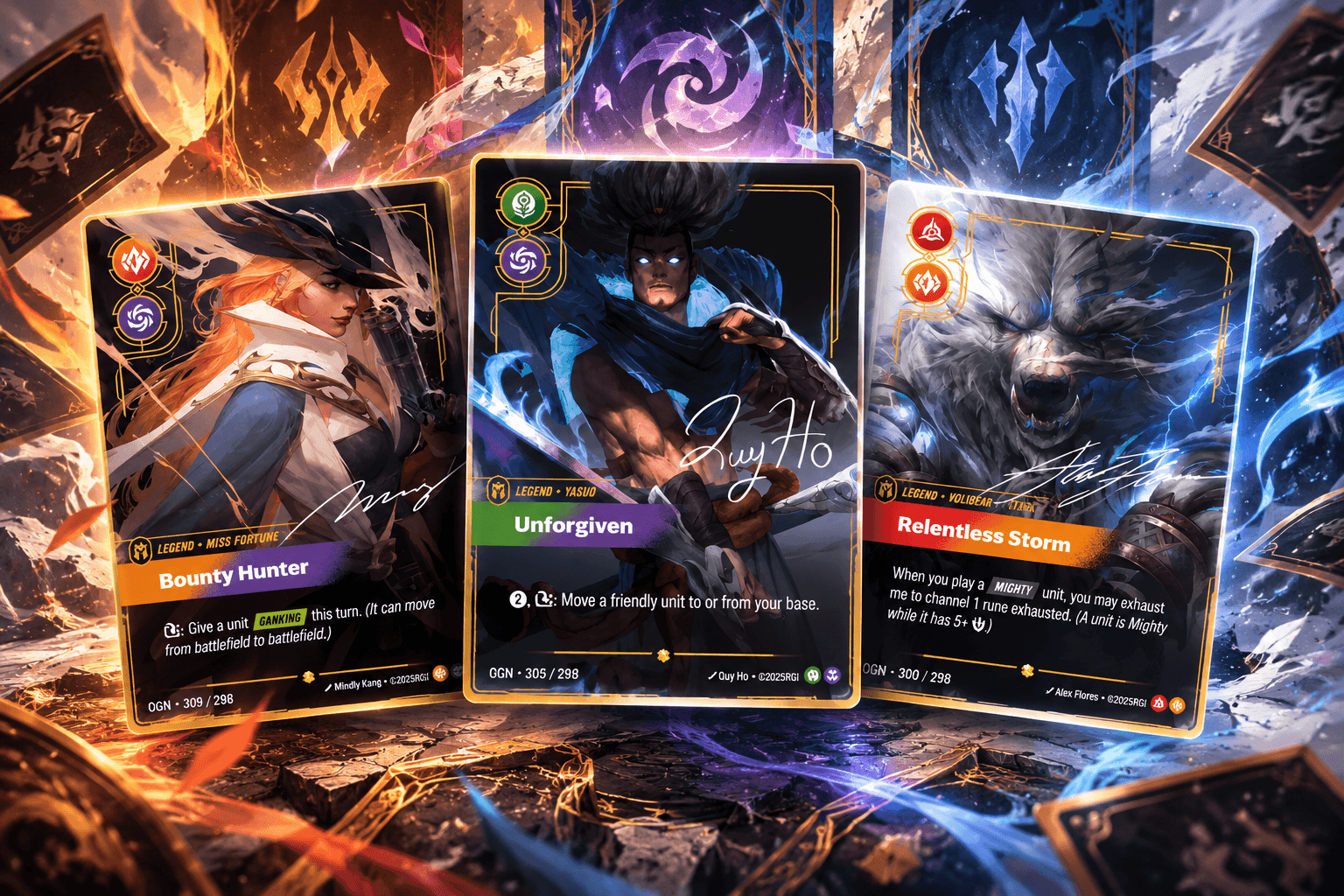
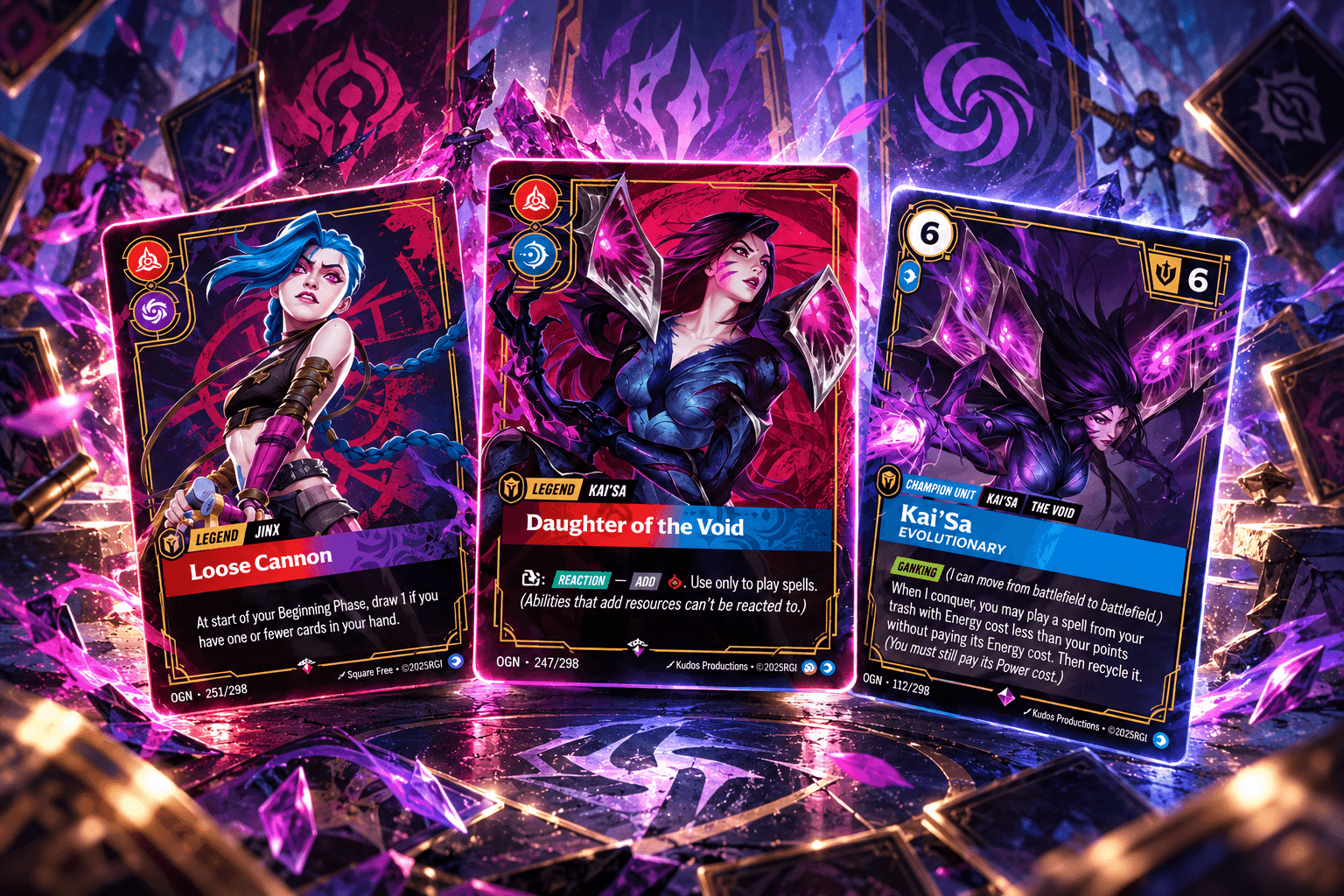
A Legend sits in your Legend Zone. It's an identity card with no energy cost and no Might stat, and its ability is always available.
A Champion Unit is a normal card you play to the board, with a cost and a Might value, representing that same character in battle.
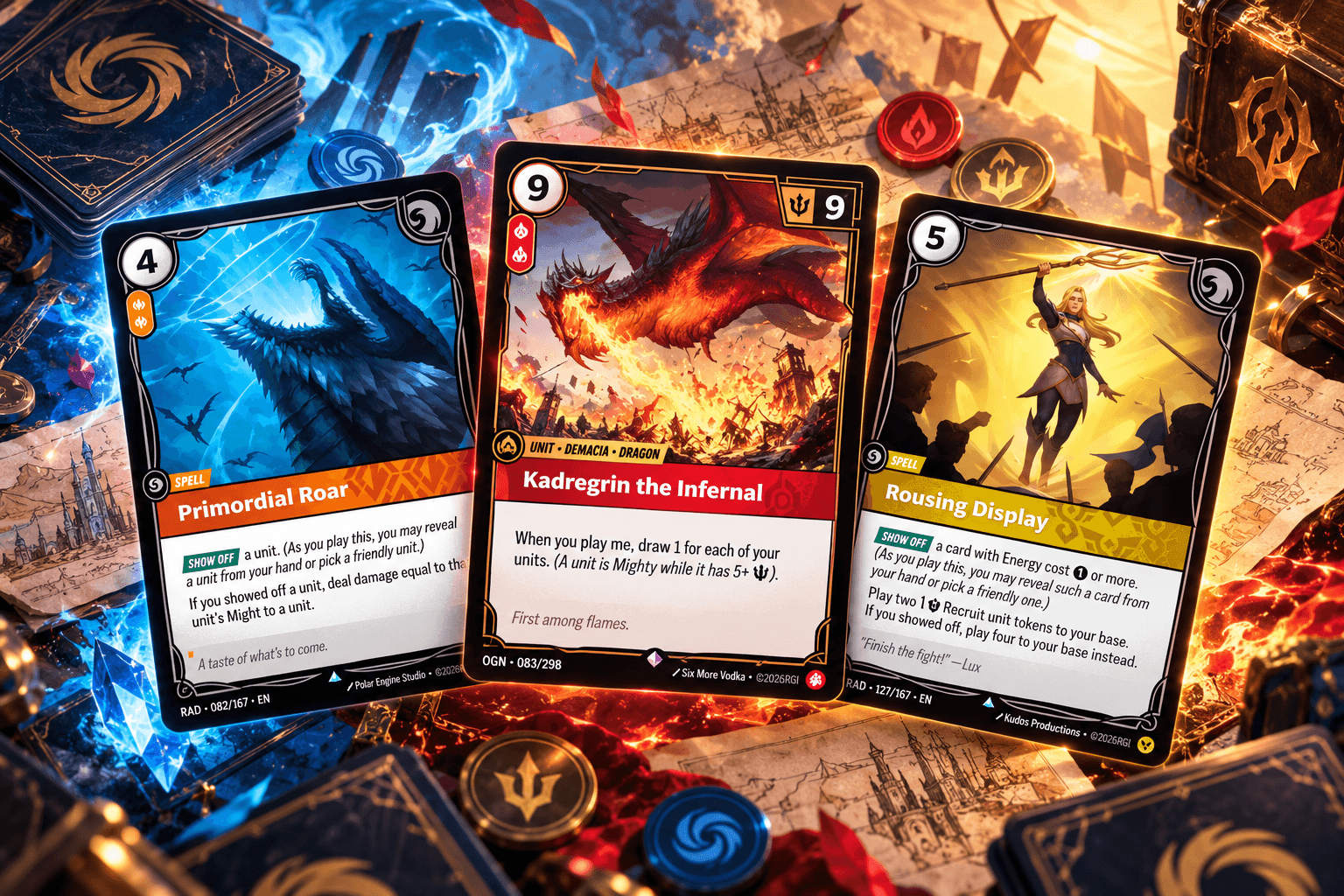
Seraphine in the Radiance set is the clearest example: she exists as a Legend and, separately, as an Epic Champion Unit that works alongside it. Our Seraphine guide covers how the pair interact.
The turn, step by step
A Riftbound turn runs through four stages.
Awaken. Unexhaust your cards from last turn, readying them for use.
Beginning. Start-of-turn effects resolve, and you collect a point for each battlefield you're holding. This is where the recurring scoring happens.
Channel. Draw runes from your rune deck, usually two per turn. Runes are your resource for paying costs.
Draw. Take one card from your main deck.
Then you play, fight over battlefields, and pass. The loop is short, which is part of why games move quickly. RiftDaily's rules reference covers the edge cases once you're past the basics.
The cheapest way to start
Three routes, in order of cost.
Showdown Decks at $34.99. These come ready to play with no collection needed. The Radiance pair headline Seraphine and Evelynn, and for a first purchase this is the obvious choice.
A single booster display at around $120 MSRP. This gives you 24 packs and plenty of cards, but no guarantee of a playable deck. Better for collectors than for learning.
Buying singles. Once you know which Legend you want to build around, buying the specific cards is cheaper than opening packs hoping for them.
Our where to buy Riftbound guide covers reliable retailers and the scams that follow new releases.
Which set should you buy into
Riftbound has five sets, released roughly one per quarter since October 2025.
The newest is Radiance, arriving 23 October 2026 with 180 cards and nine new Legends, detailed on riftbound.gg. New sets are the easiest entry point because everyone starts level and the cards are widely available.
Older sets have cheaper playable cards but scarcer premium ones. Our guide to every Riftbound set in order covers all five plus the 2027 roadmap.
If you're starting now, start with Radiance. Our Radiance Legends guide covers the nine champions you'd be choosing between.
Keywords you'll meet early
You don't need to memorise these, but recognising them helps.
- Empower, introduced in Vendetta
- Deploy, Disarm, and Reveal and Show Off, all arriving with Radiance
- Recruit, which creates 1 Might token units
Deploy is worth understanding specifically because it connects to the scoring system. A Deploy card sits on a battlefield and is destroyed if your opponent takes that space, which means it's directly exposed to the thing the whole game is about.
What it costs to be competitive
Honest answer: less than most trading card games, for now.
Playable cards are cheap. The expensive Riftbound cards are Signature collector printings appearing roughly once per 720 packs, and they're display pieces rather than deck requirements.
So the gap between a $35 Showdown Deck and a tuned competitive list is mostly singles at modest prices, not four-figure chase cards. That's unusual and worth taking advantage of while the game is young.
How JK Index helps
We index the full Riftbound catalog with sold history for every printing, including the cheap playable cards most price sites ignore in favour of chase cards.
For a new player that's the useful part. Knowing a card you need costs $2 rather than $20 is what actually determines whether you can build the deck you want. You can browse Origins, Spiritforged, Unleashed and Vendetta, track what you own in your portfolio, or check the marketplace.
The takeaway
Riftbound is a territory game. You score by conquering and holding battlefields, you need 8 points, and your final point has to come from holding ground rather than any other source.
A deck is a Champion Legend, a 40-card main deck matching its two domains, and exactly 12 runes. The cheapest sensible way in is a $34.99 Showdown Deck, which plays out of the box.
FAQ
How do you win at Riftbound?
By scoring 8 points, earned by conquering battlefields and holding them. Your 8th point must specifically come from holding a battlefield or conquering all of them in one turn.
How many cards are in a Riftbound deck?
A main deck of at least 40 cards with up to 3 copies of any card, plus a rune deck of exactly 12 runes, plus one Champion Legend that defines which cards you can include.
What are domains in Riftbound?
The colour system. Your Champion Legend prints two domains, and every card in your main deck must match one of them, so your Legend choice determines your whole card pool.
What's the difference between a Legend and a Champion Unit?
A Legend sits in your Legend Zone with no cost or Might and provides a persistent ability. A Champion Unit is played to the board with a cost and Might, representing the same character in battle.
What's the cheapest way to start playing Riftbound?
A Showdown Deck at $34.99 MSRP. It plays straight out of the packaging with no collection required, which makes it far better value for a first purchase than a booster box.
How does the turn work in Riftbound?
Four stages: Awaken to unexhaust your cards, Beginning for start-of-turn effects and holding points, Channel to draw usually two runes, then Draw one card from your main deck.
Do I need expensive cards to play competitively?
No. The expensive Riftbound cards are Signature collector printings that appear about once per 720 packs. Playable cards trade cheaply, so a competitive list is mostly modest singles.
Which Riftbound set should a beginner buy?
Radiance, released 23 October 2026, is the newest and most widely available. New sets suit beginners because cards are easy to find and everyone is learning them at the same time.