Riftbound Overnumbered Cards: The Collector Tier Explained
An Overnumbered card has a collector number higher than its set's total. Card 299 in a 298-card set. Card 238 in a 219-card set. The number before the slash is bigger than the number after it, and that's the whole tell.
They sit above Epic at the top of Riftbound's standard rarity ladder, appear roughly once per three booster boxes, and Riot has confirmed their artwork will never be reprinted.
This guide covers how to identify one, how often they appear, what the asterisk means, and why they anchor the game's entire high-end market. Rarity details come from RiftCompare's variant glossary and TCG Odds' rarity guide.
How to spot one in two seconds
Look at the collector number in the bottom-left corner of the card.
Compare the two numbers. If the first is larger than the second, the card is Overnumbered.
| Collector number | Overnumbered? |
|---|---|
| 150/298 | No, a normal base-set card |
| 299/298 | Yes |
| 238/219 | Yes |
| 174*/167 | Yes, and signed |
That's it. No symbol to memorise, no frame to recognise from across a table. The numbering does the work.
It's a genuinely well-designed system. Most card games signal top rarities through foil patterns or set symbols that are hard to describe and easy to mistake. Riftbound uses arithmetic.
What the asterisk means
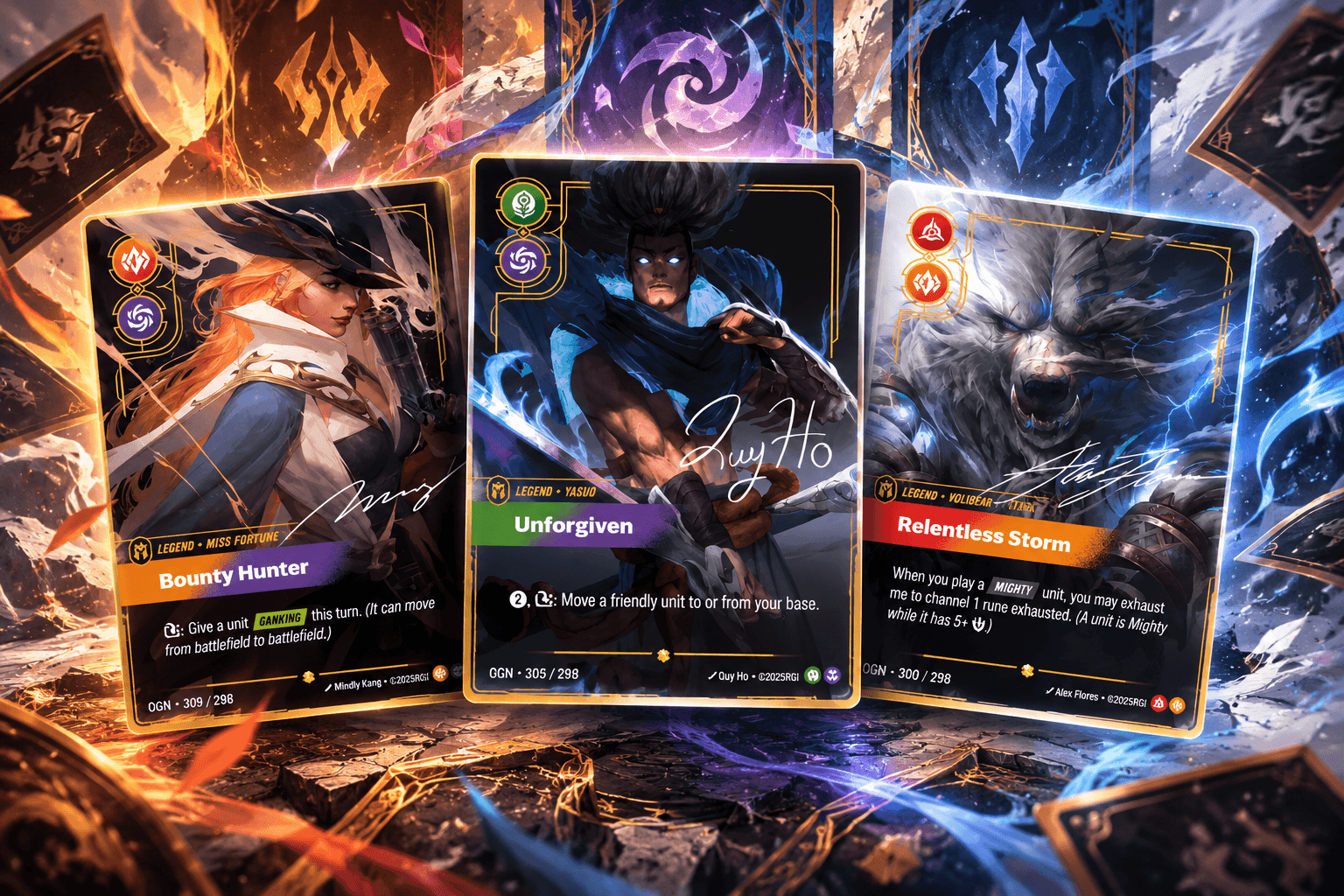
Some Overnumbered cards carry an asterisk in the serial number, like 174*/167.
That asterisk marks the artist's authentic signature on the card. Roughly one in ten Overnumbered cards is signed this way.
So there are two levels stacked here. The Overnumbered treatment is the base tier, and the signature is a scarcer layer on top of it.
The pull rates, and why they add up
Community box-break tracking across thousands of packs puts Overnumbered at roughly one per three booster boxes, a figure corroborated by RiftCompare's rarity guide.
Now stack the signature on top. If one in ten Overnumbered cards is signed, a Signature Overnumber should appear roughly once per thirty boxes.
At 24 packs per box, that's one per 720 packs.
That figure matches the Signature Overnumber rate published for Origins exactly. Two independent measurements, one from box-break tracking and one from set-level rate data, landing on the same number. Our rarities and pull rates guide has the full set-by-set breakdown.
It's rare for community data and published rates to agree this cleanly, and it's a good reason to trust both.
Why Riot never reprinting them matters
Overnumbered cards carry exclusive artwork and enhanced foil treatments, and Riot has confirmed these specific art and frame combinations will never be reprinted.
That's a stronger commitment than most publishers make, and it changes the calculation for collectors.
In games without a no-reprint policy, a chase card's scarcity is always provisional. A reprint in an anniversary set or a premium collection can halve a card's value overnight. Pokémon does this routinely, which is why its modern reprints trade below their originals.
A confirmed no-reprint guarantee removes that risk. Whatever an Overnumbered card is worth, it isn't going to be undercut by a future printing of the same art.
Where Overnumbered sits against the other tiers
Riftbound's ladder runs Common, Uncommon, Rare and Epic as functional rarities, with collector treatments layered on top.
- Overnumbered sits above Epic as the top standard tier
- Signature Overnumber adds the artist's signature, at one in ten Overnumbered cards
- Ultimate sits above even that, and has been printed only twice in the game's history
Ultimate is the exception rather than a regular rung. Unleashed introduced it with Baron Nashor, and Radiance brings the second on 23 October 2026 at roughly 0.025% of packs. Our Radiance Ultimate Rare guide covers that tier in full.
So for most sets, Overnumbered is effectively the ceiling.
Why this tier carries the game's value
Look at what Riftbound's most expensive cards actually are and the pattern is stark.
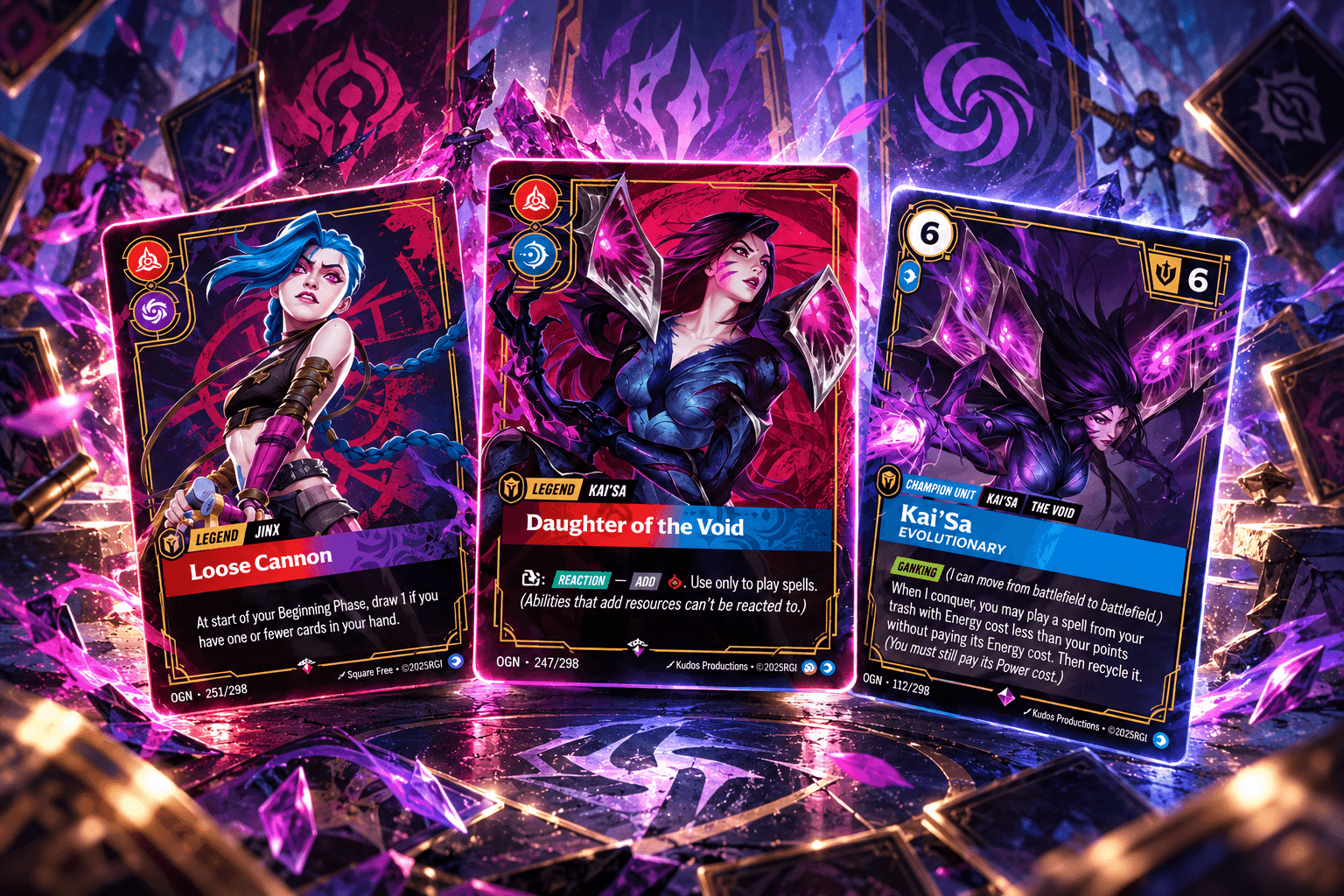
The top of the market is almost entirely Signature Overnumbered cards. Ahri, Inquisitive in Signature treatment leads the game. Kai'Sa, Ahri Nine-Tailed Fox and Miss Fortune Signatures from Origins all sit in the top five.
Compare a Signature against its own base card and the premium is concrete. The non-Signature Ahri, Inquisitive trades around $670 raw, while the Signature version trades around $5,000. Same card, same set, roughly 7.5 times the price.
That's not a champion premium. It's a treatment premium, and it's the single most useful thing to understand about Riftbound pricing.
What this means when you're opening
A few practical points that follow directly from the rates.
- Expect roughly one Overnumbered card per three boxes. A single box more often than not produces none
- Check the collector number on every Rare-or-better slot. The treatment is easy to miss if you're sorting quickly
- If you find an asterisk, you're holding something roughly ten times scarcer than a standard Overnumber
- Don't buy boxes specifically to chase Signatures. At one per 720 packs, that's thirty boxes for one expected copy
For buying advice on sealed product, our where to buy Riftbound guide covers reliable retailers.
Overnumbered in Radiance
Radiance follows the same structure. Its base set runs to 167 numbered cards, with Overnumbered cards above that.
Seraphine is the clearest confirmed example. Her Legend prints at RAD 151/167 as a base card, and her Signature chase version at RAD 174/167* — overnumbered, and the asterisk marks the signature.
Our Seraphine guide covers all three of her printings, and the Radiance card list tracks confirmations as reveals land.
How JK Index helps
We index the full Riftbound catalog with sold history for every printing, and we track Overnumbered and Signature treatments separately from their base cards.
Ahri, Inquisitive is the case for it. The base card and the Signature are the same name, the same set and the same artwork subject, with a 7.5x price gap between them. Any site that merges them misprices both. You can browse Origins, Spiritforged, Unleashed and Vendetta, track what you own in your portfolio, or check the marketplace.
The takeaway
An Overnumbered card is one whose collector number exceeds its set total, and you identify it by reading two numbers in the bottom-left corner. They appear about once per three boxes, and one in ten carries an artist signature marked by an asterisk.
Riot has confirmed the artwork will never be reprinted, which is why this tier, rather than any particular champion, holds almost all of Riftbound's high-end value.
FAQ
What is an Overnumbered card in Riftbound?
A card whose collector number is higher than its set's total, such as 299 in a 298-card set. They sit above Epic as the top standard rarity tier and carry exclusive artwork and enhanced foil.
How do I know if my card is Overnumbered?
Read the collector number in the bottom-left corner. If the number before the slash is larger than the number after it, the card is Overnumbered. No symbol recognition needed.
What does the asterisk on a Riftbound card mean?
It marks the artist's authentic signature. Roughly one in ten Overnumbered cards carries one, which makes Signature Overnumbers about ten times scarcer than standard Overnumbers.
How rare are Overnumbered cards?
Roughly one per three booster boxes, based on community box-break tracking across thousands of packs. A single box more often than not produces none.
How rare is a Signature Overnumber?
About one per thirty boxes, which is one per 720 packs at 24 packs per box. That figure comes out of the rates and matches the published Origins rate independently.
Will Overnumbered cards be reprinted?
No. Riot has confirmed these specific art and frame combinations will never be reprinted, which removes the reprint risk that undercuts chase cards in many other trading card games.
Is Overnumbered the highest Riftbound rarity?
For most sets, yes. The Ultimate tier sits above it but has only been printed twice: Baron Nashor in Unleashed, and a second card arriving with Radiance in October 2026.
Why are Signature Overnumbered cards so expensive?
Scarcity plus the no-reprint guarantee. The comparison that shows it best is Ahri, Inquisitive, where the base card trades around $670 raw and the Signature around $5,000, roughly 7.5 times more.