Articles
Want new article announcements?
Article emails are optional and off until you explicitly enable them.
Manage article email preference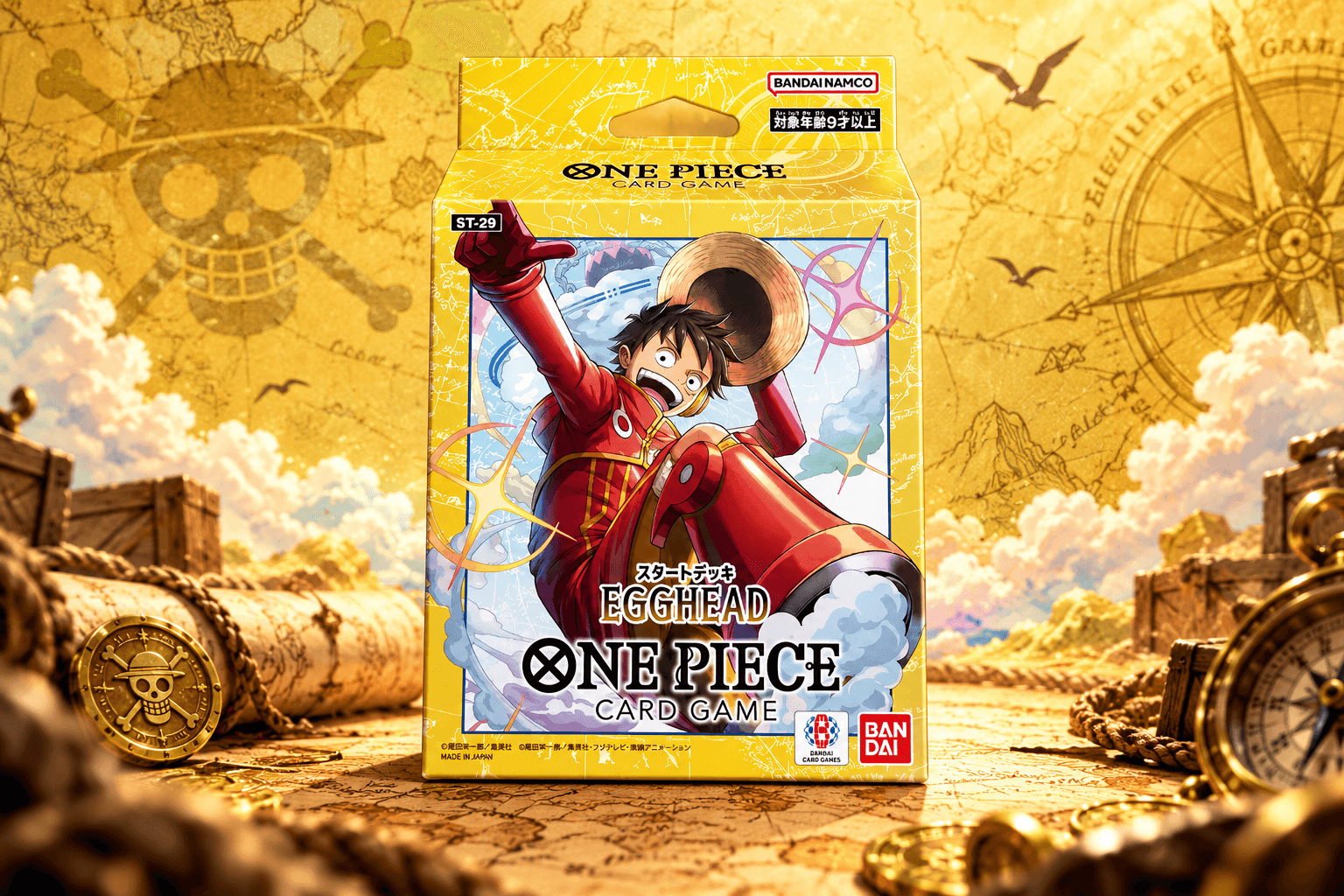
Egghead Arc Cards: Luffy, Zoro and Nami Ranked
Three of the most-searched One Piece cards come from a single starter deck, and none of them costs more than twenty-five dollars. The expensive Egghead cards are somewhere else entirely.
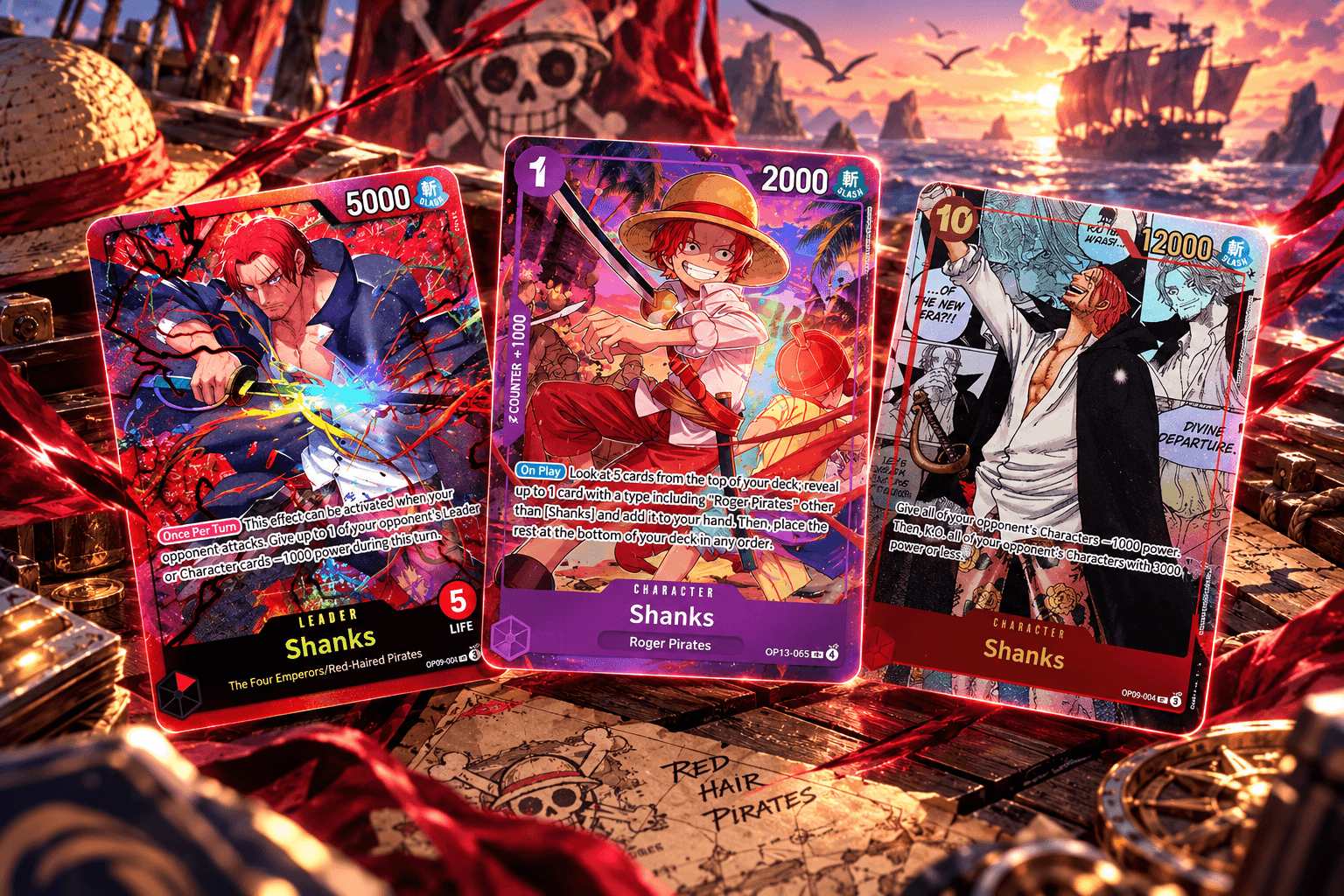
Yasopp and Benn Beckman: The Red Hair Pirates Cards
The captain's best card costs over sixteen hundred dollars. His first mate's costs forty-five. One crew, one treatment, and the entire gap between them.
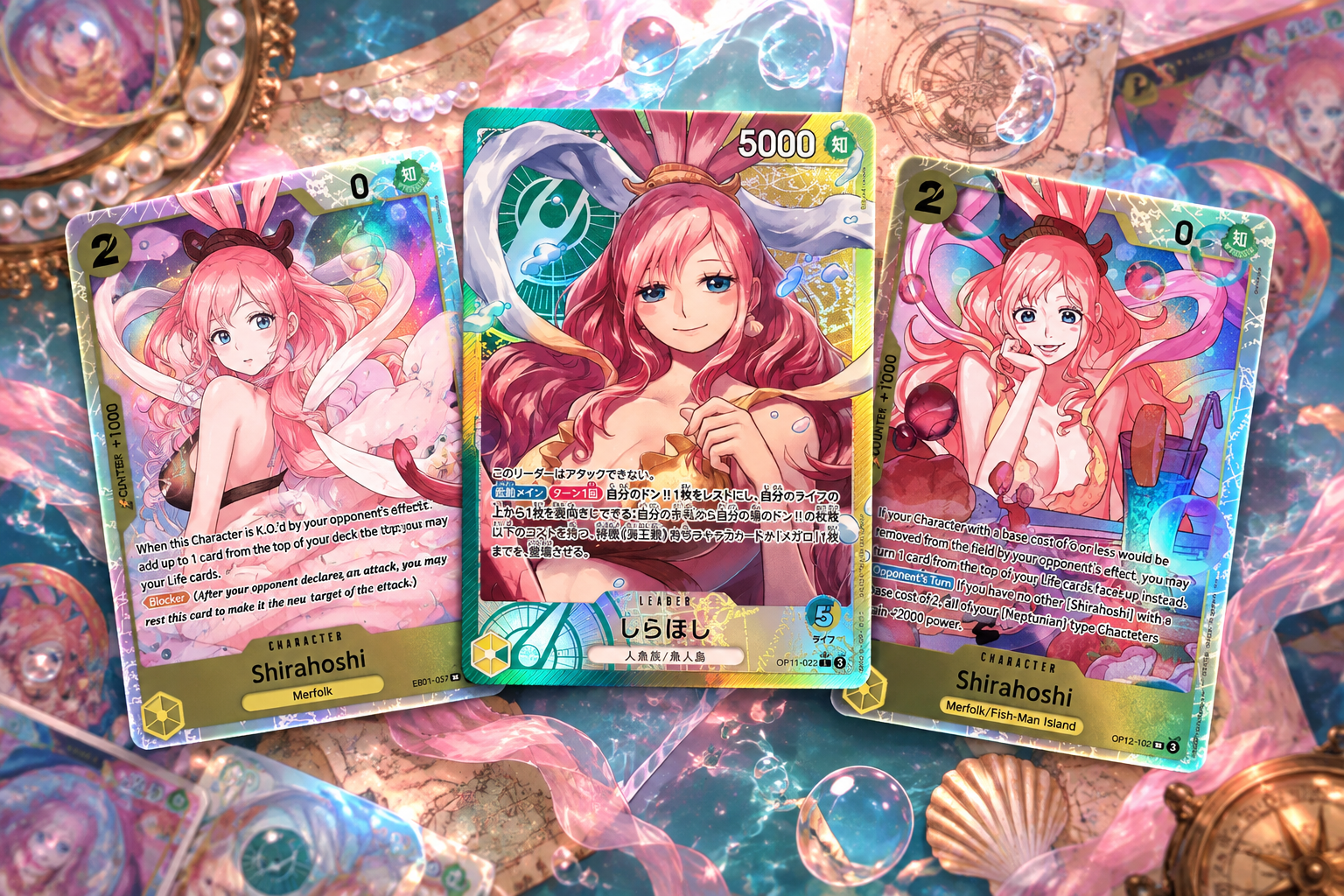
Shirahoshi Card Value: Every Print Ranked
Her 68-cent card multiplies sixteen times when graded. Her one-dollar card multiplies seventeen. The expensive ones do nothing of the sort, and that inversion is the whole story.
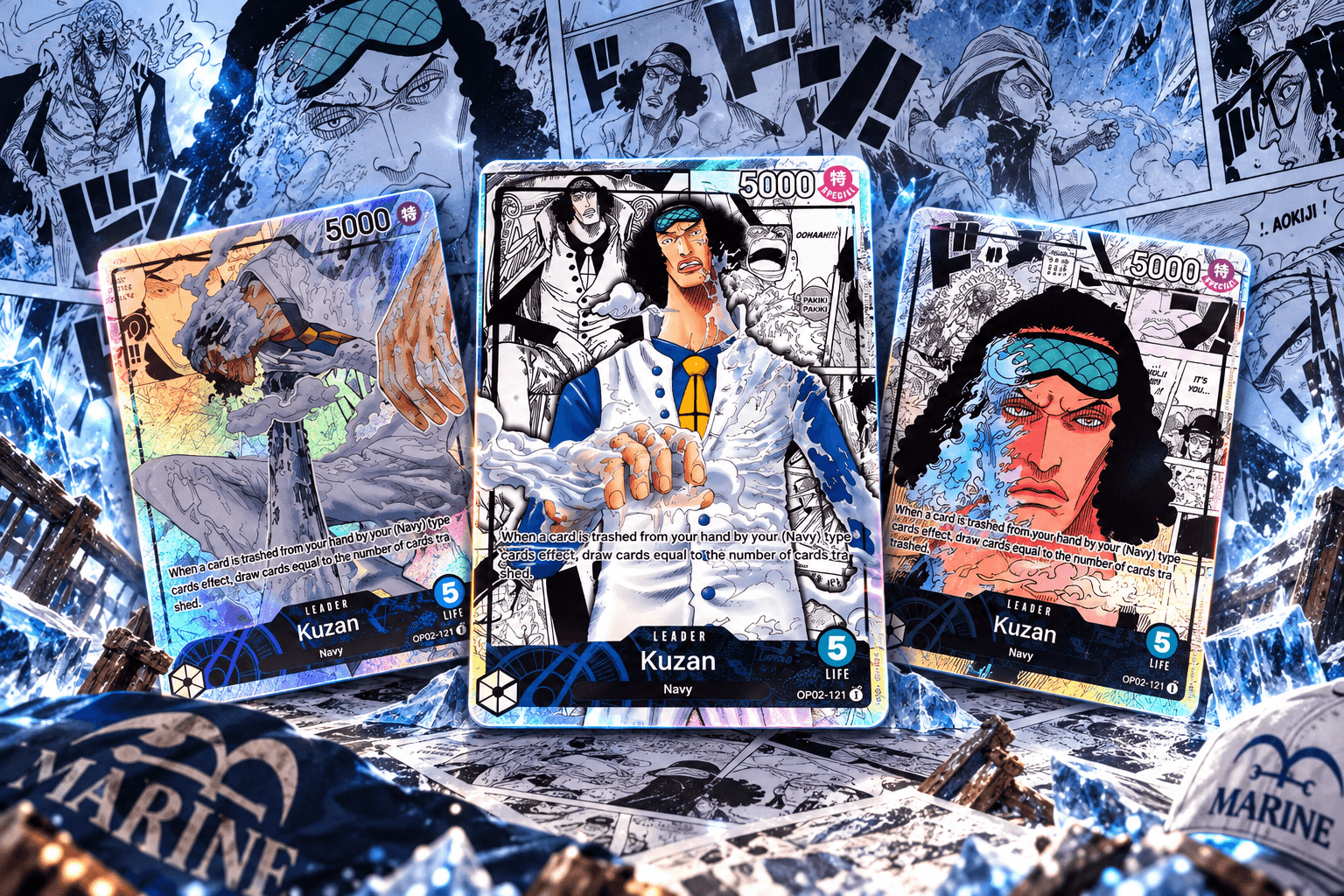
Kuzan and Tashigi: Marine Cards Ranked by Value
Two Marines, the same monthly search volume, and a seven-fold difference in what their best cards fetch. The reason sits on one card and nowhere else.
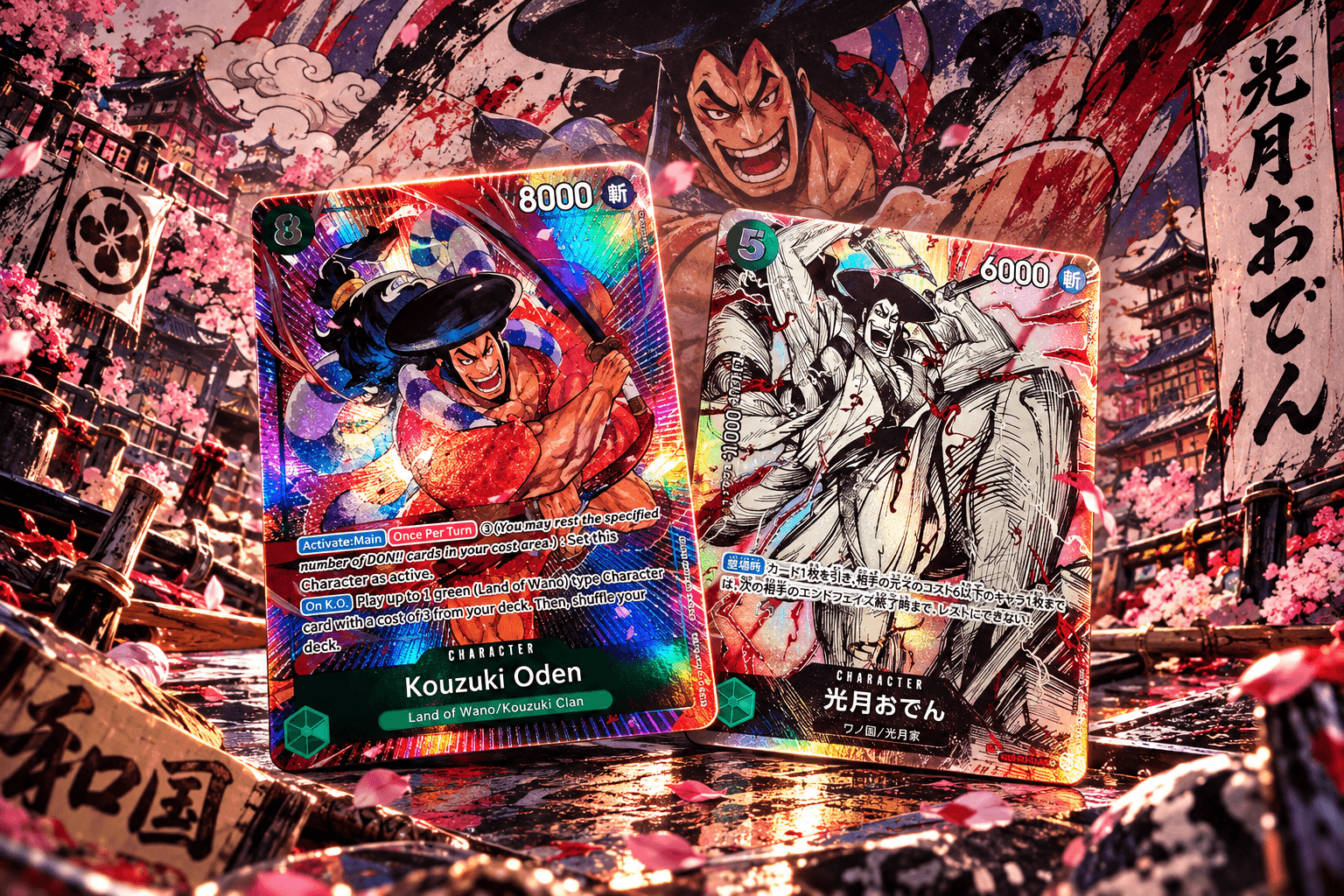
Kozuki Oden Card Value and the Wano Cards
The card game spells his name differently to almost everyone searching for it, which is part of why his cards stay cheaper than his standing in the story suggests.
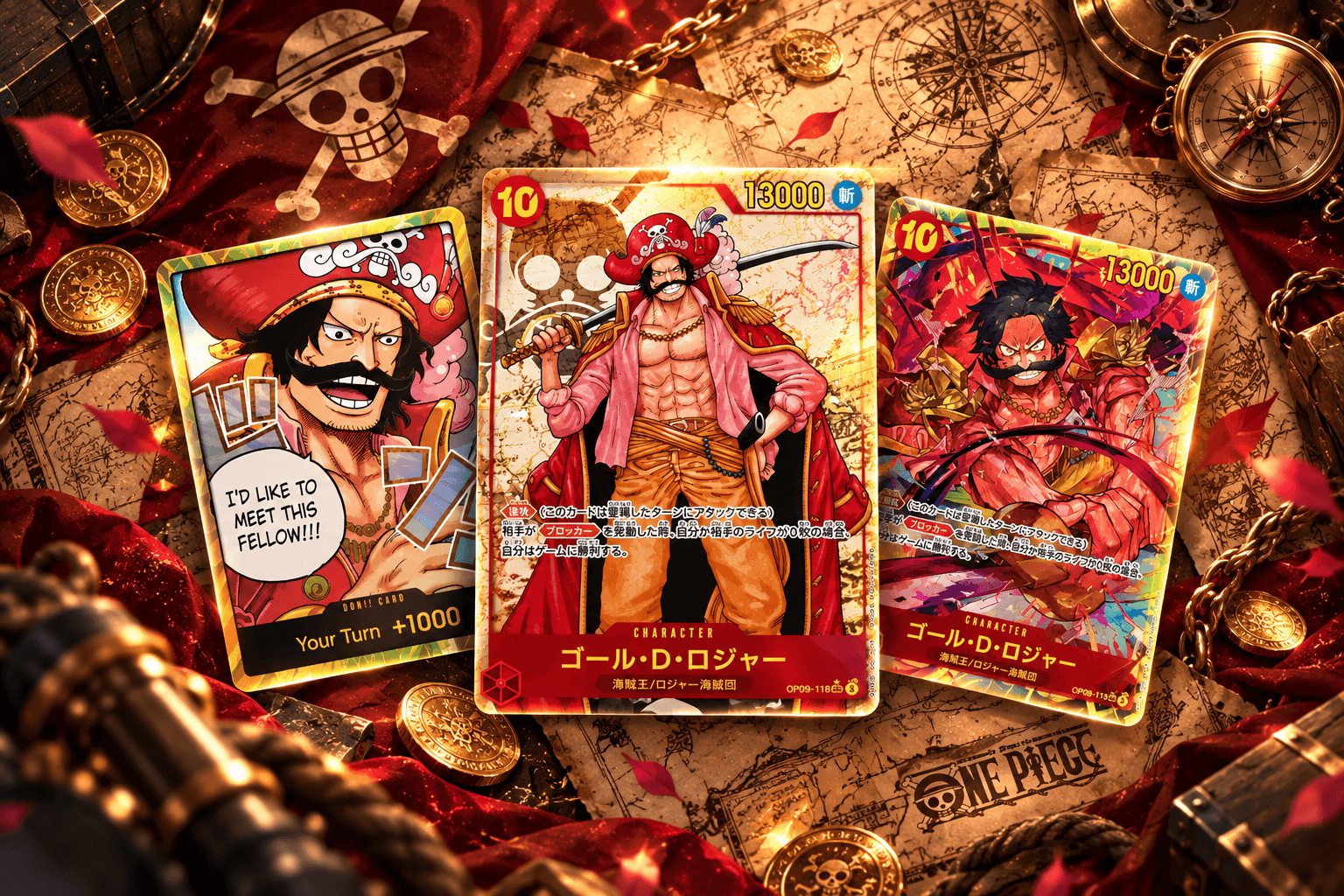
Silvers Rayleigh, Gol D. Roger and the Roger Pirates Cards
An eighty-seven cent card that returns seventy-five times its price in a slab sits in the same catalogue as a four-thousand dollar manga print. Both belong to the Pirate King.
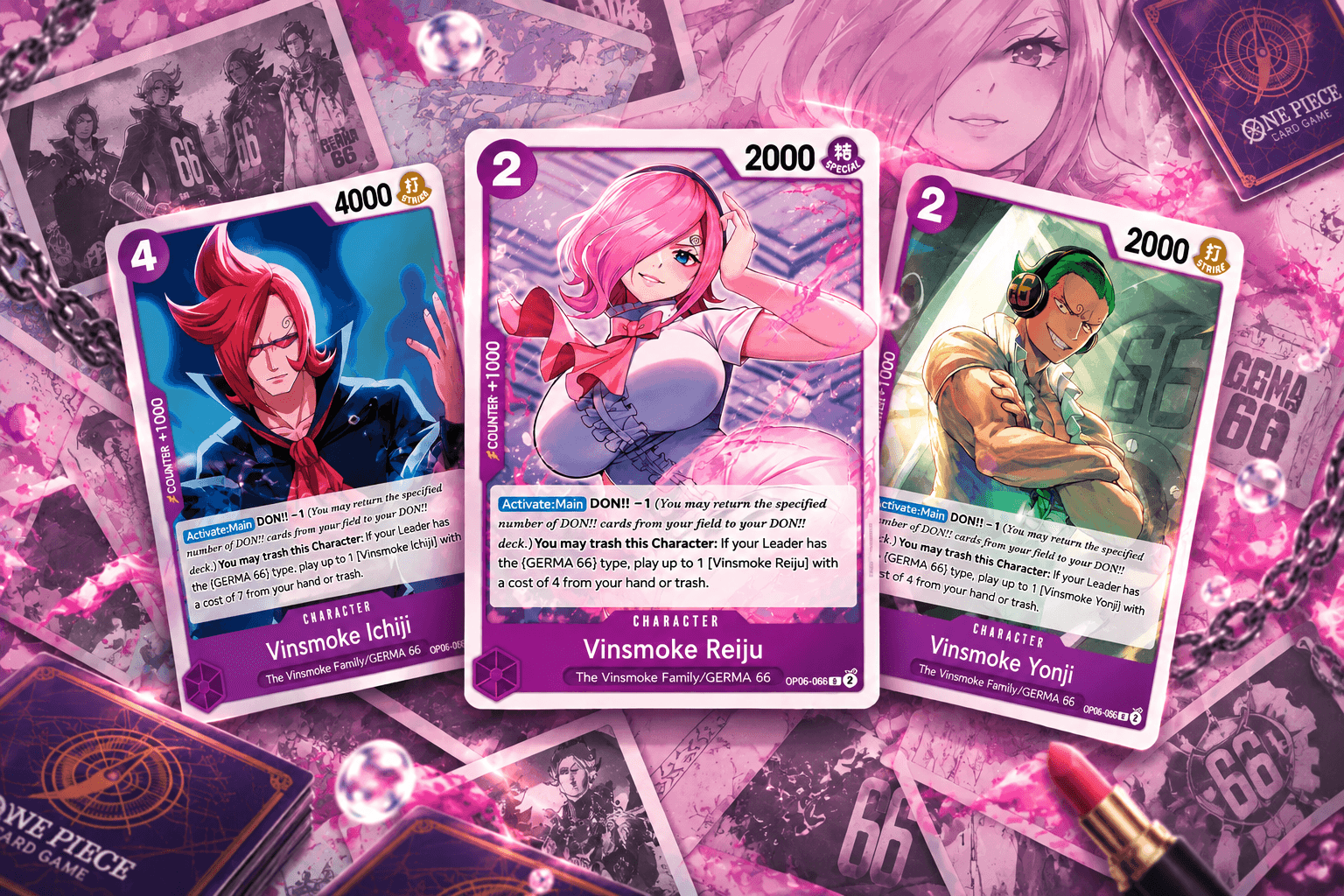
Vinsmoke Sanji and Vinsmoke Judge: The Germa Cards
One family, and the widest internal spread in the game: a six-cent card, a five-dollar card that grades at fifteen hundred, and a prize card worth nearly four thousand.
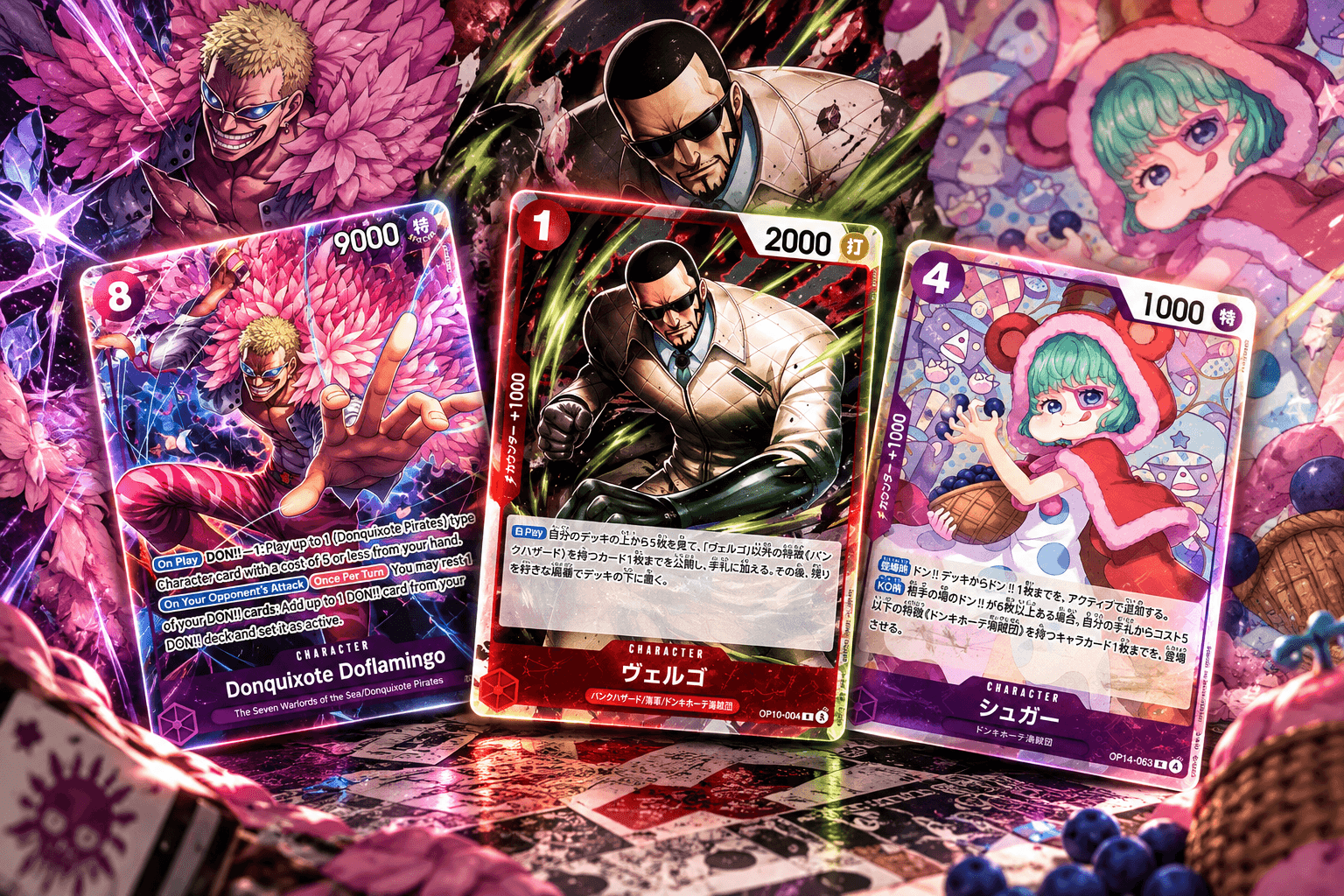
Donquixote Family Cards: Trebol, Senor Pink and the Doflamingo Crew Ranked (2026)
The Donquixote family is the one crew in One Piece where value runs backwards. The executives are four-cent commons, the boss caps at $260, and the traitor brother clears $859.
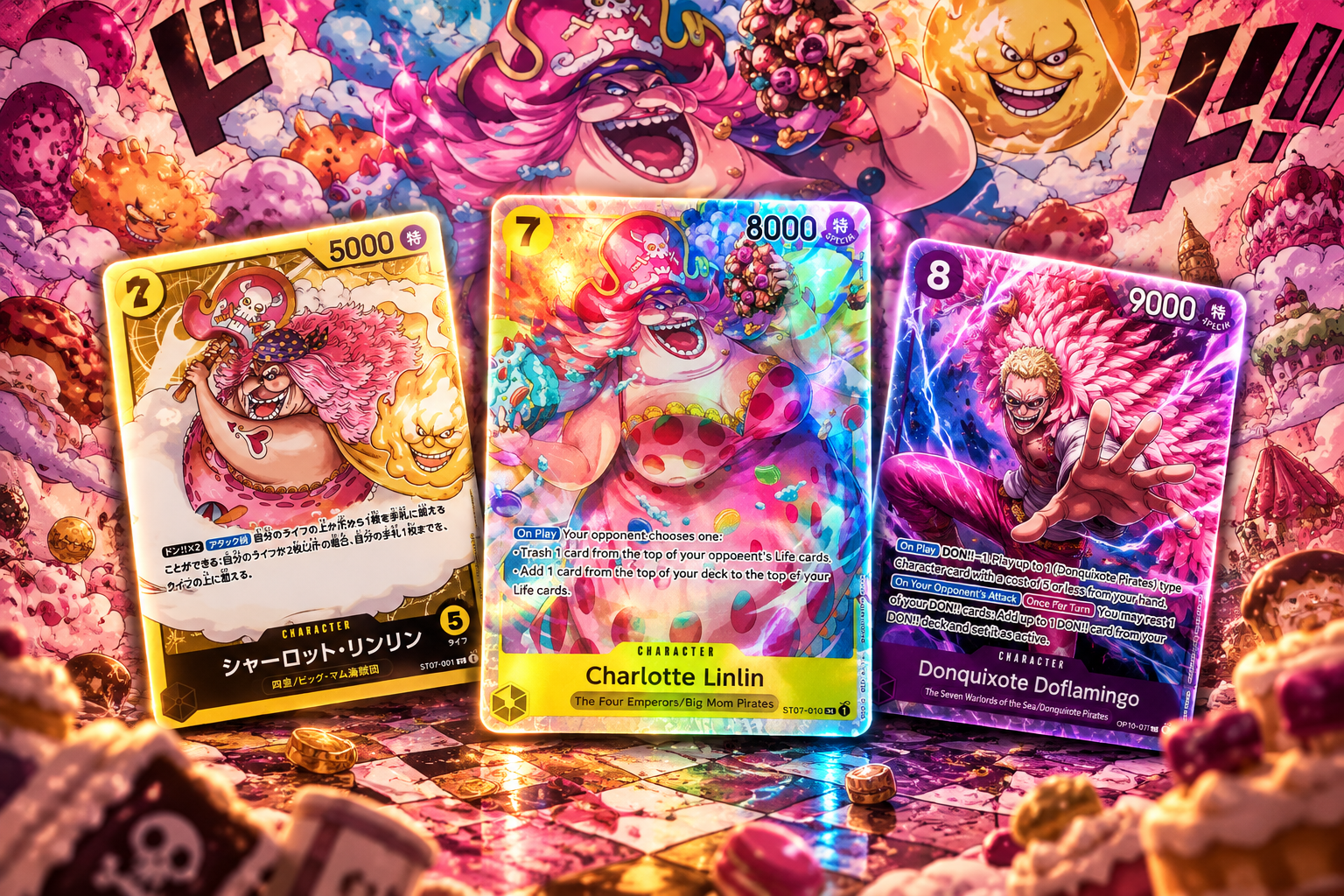
Charlotte Linlin and the Big Mom Pirates Cards: Every Printing Ranked by Value (2026)
Three Charlottes clear $500. Four never clear $8. The gap has almost nothing to do with who fights hardest in the anime, and everything to do with who got handed out at a tournament.
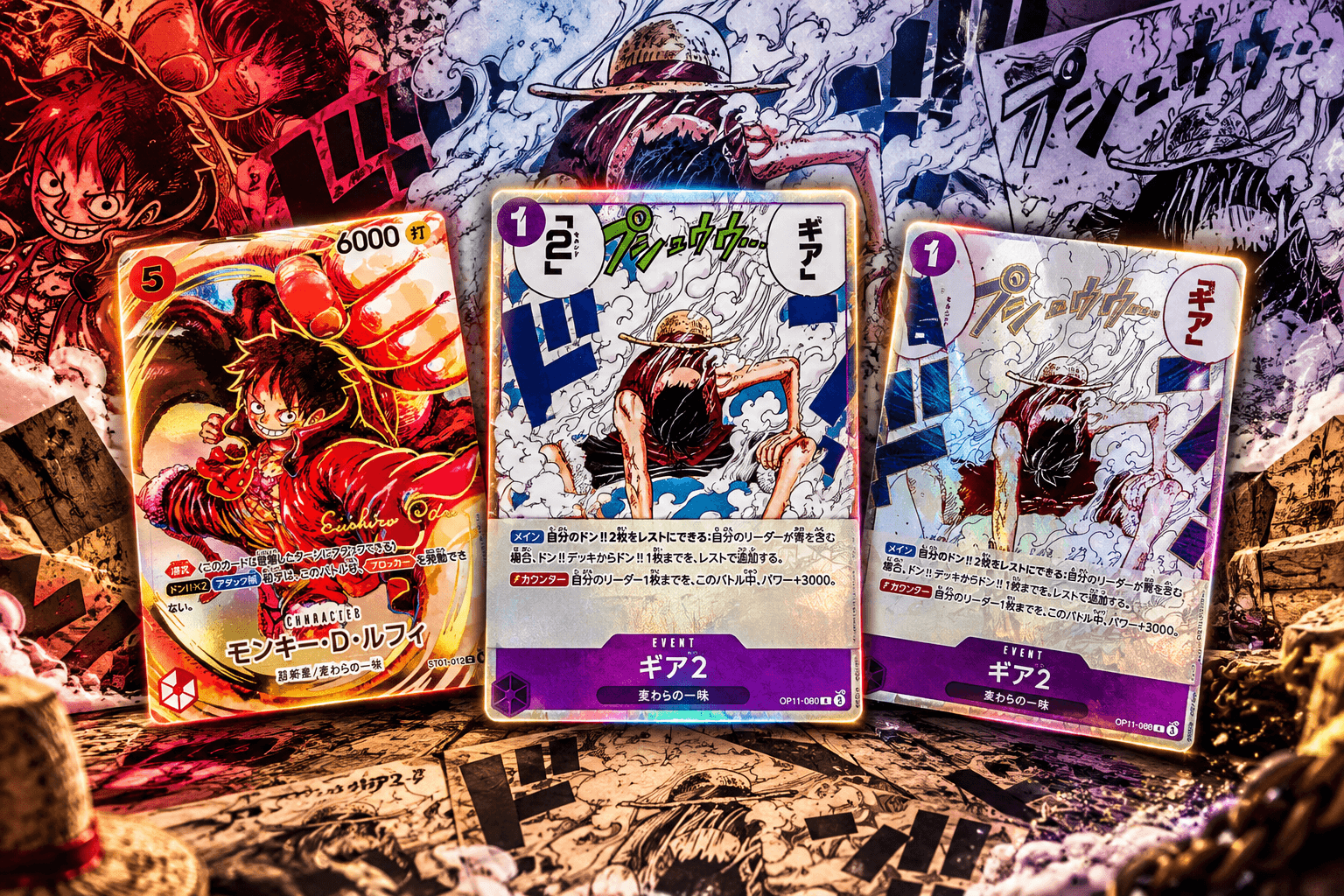
Gear 2, Gear 4 and Snake Man: Every Luffy Form Card Explained (2026)
Search the official card database for Gear Four and you get zero results. Search Snakeman and you get zero. The forms are real, the card names are not, and that gap is why these searches fail.
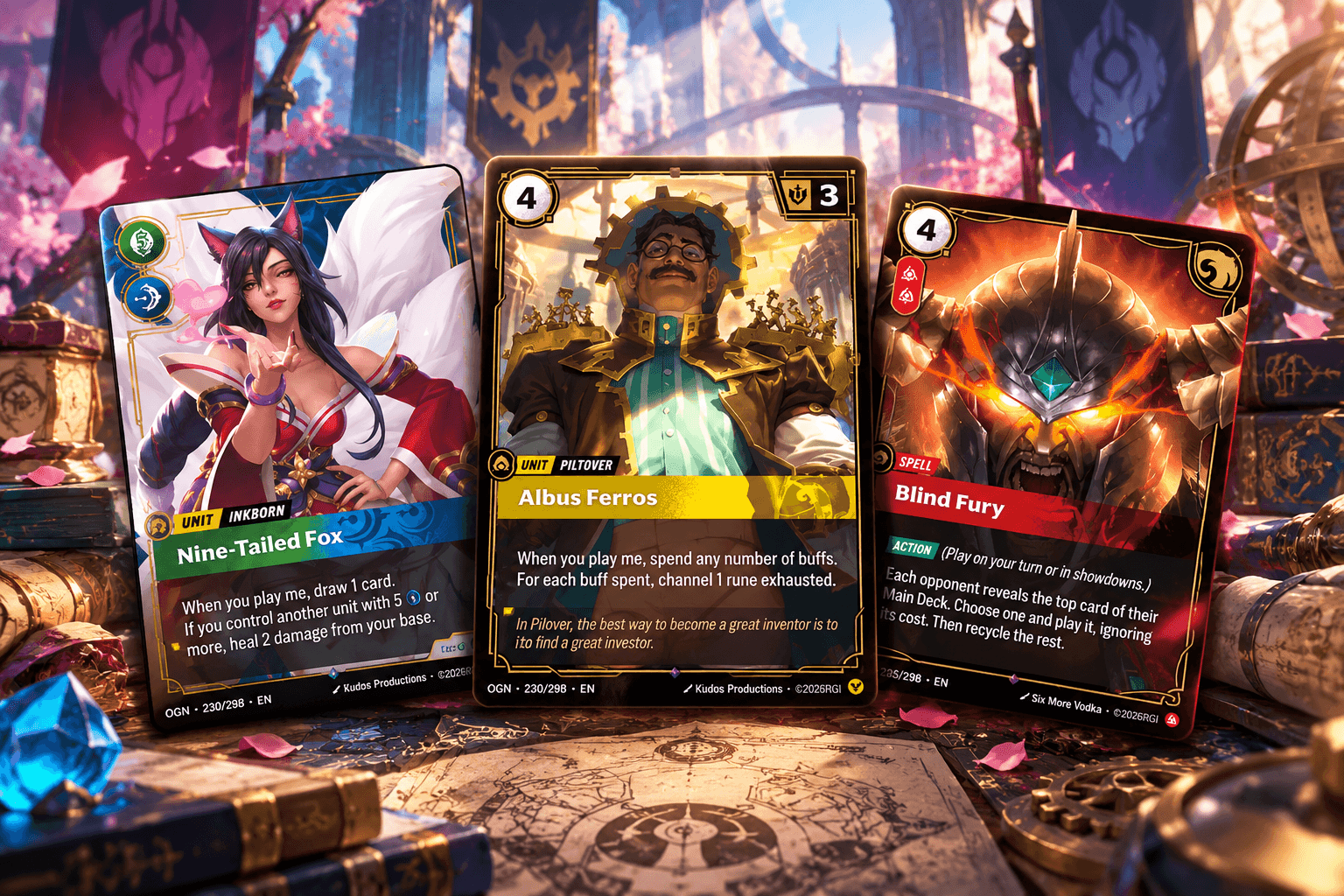
The Most Expensive Riftbound Cards in 2026
Every single card in the top fifteen shares one trait, and it isn't the champion on the front. A $115,000 tournament prize sits outside the list entirely, for a reason worth explaining.
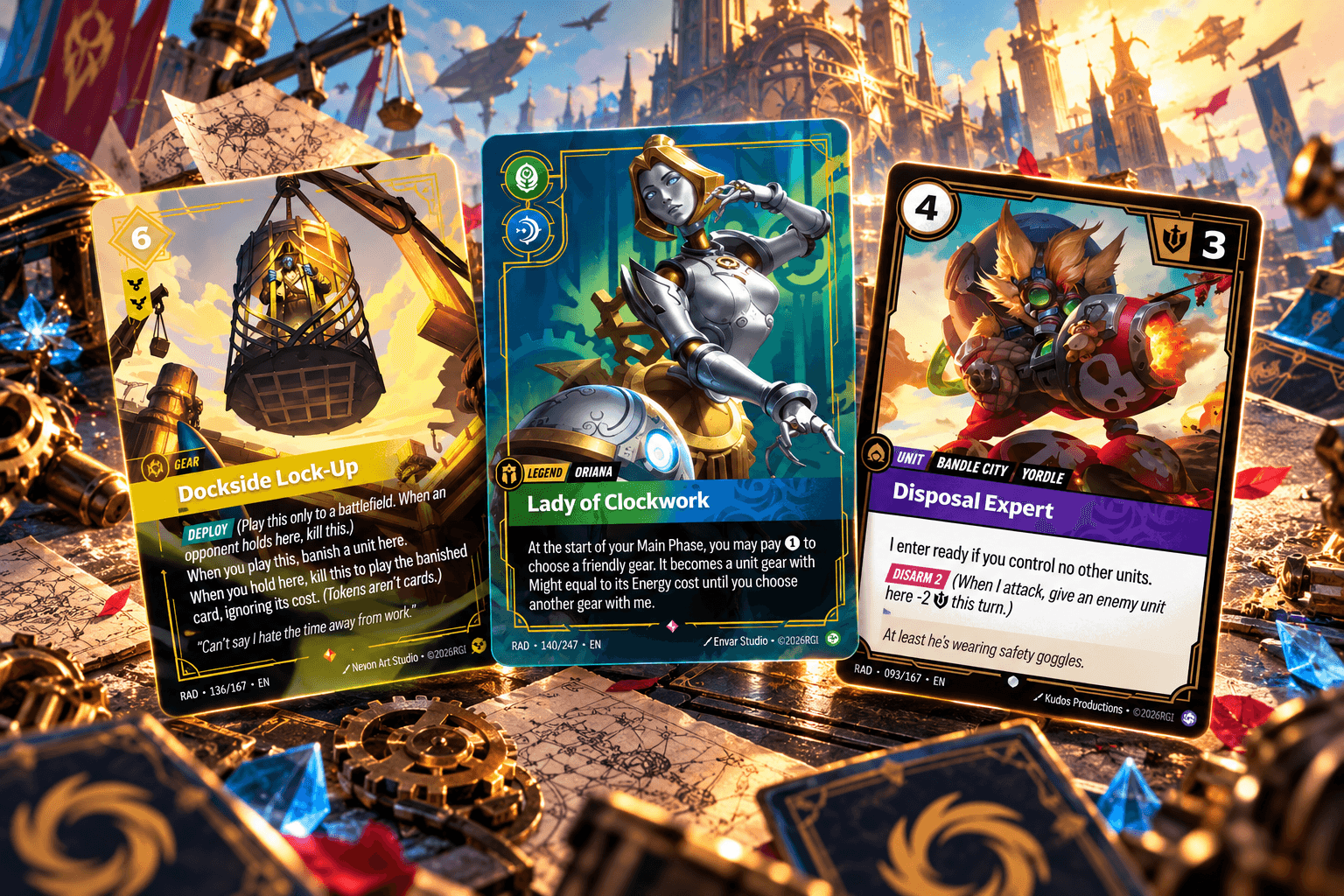
Riftbound's Deploy Keyword Explained
Most Gear attaches to a unit and travels with it. Deploy does the opposite: it plants the card on a battlefield and ties its survival to holding ground you may not be able to hold.
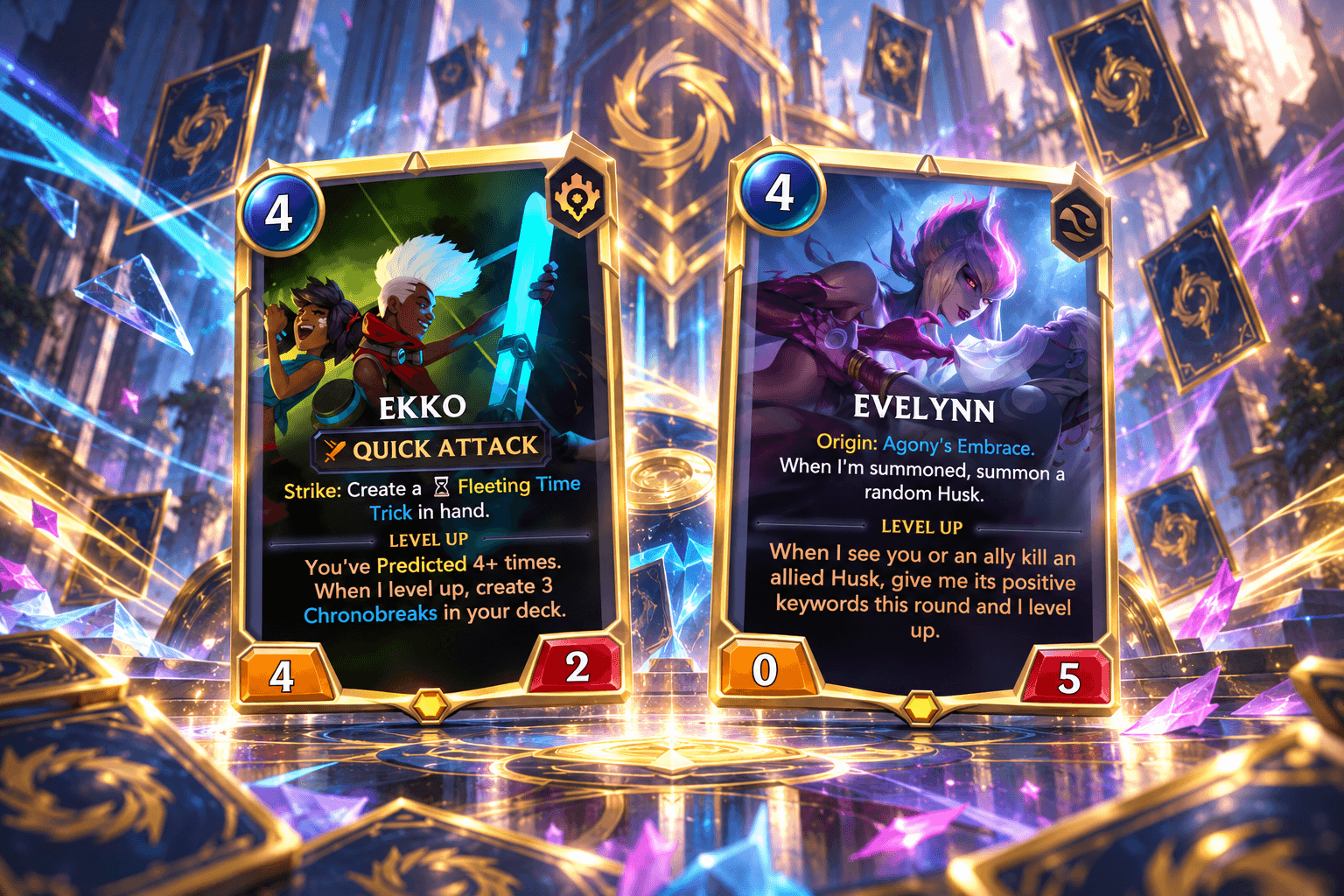
Ekko and Evelynn in Riftbound: The Two Radiance Legends to Watch
Ekko's ability discounts a unit and then kills it. Evelynn headlines a $34.99 deck with no rules text at all. Two Legends at opposite ends of what Riot has chosen to reveal.
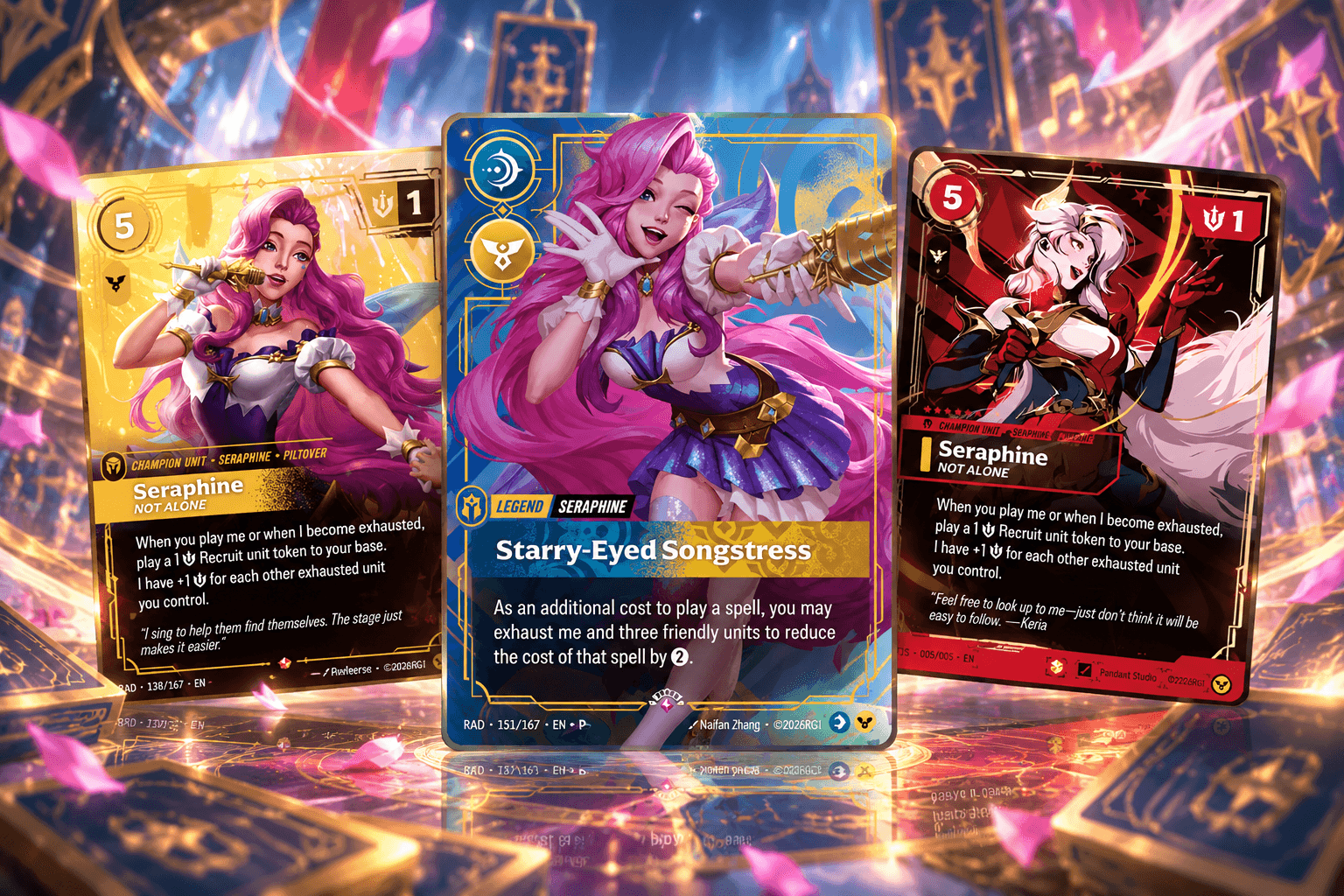
Seraphine in Riftbound: Cards, Deck Role and What She Does
Three printings, two different cards, and one deck built around exhausting your own board. Seraphine is the only Radiance champion with full rules text, so she's the one to learn first.
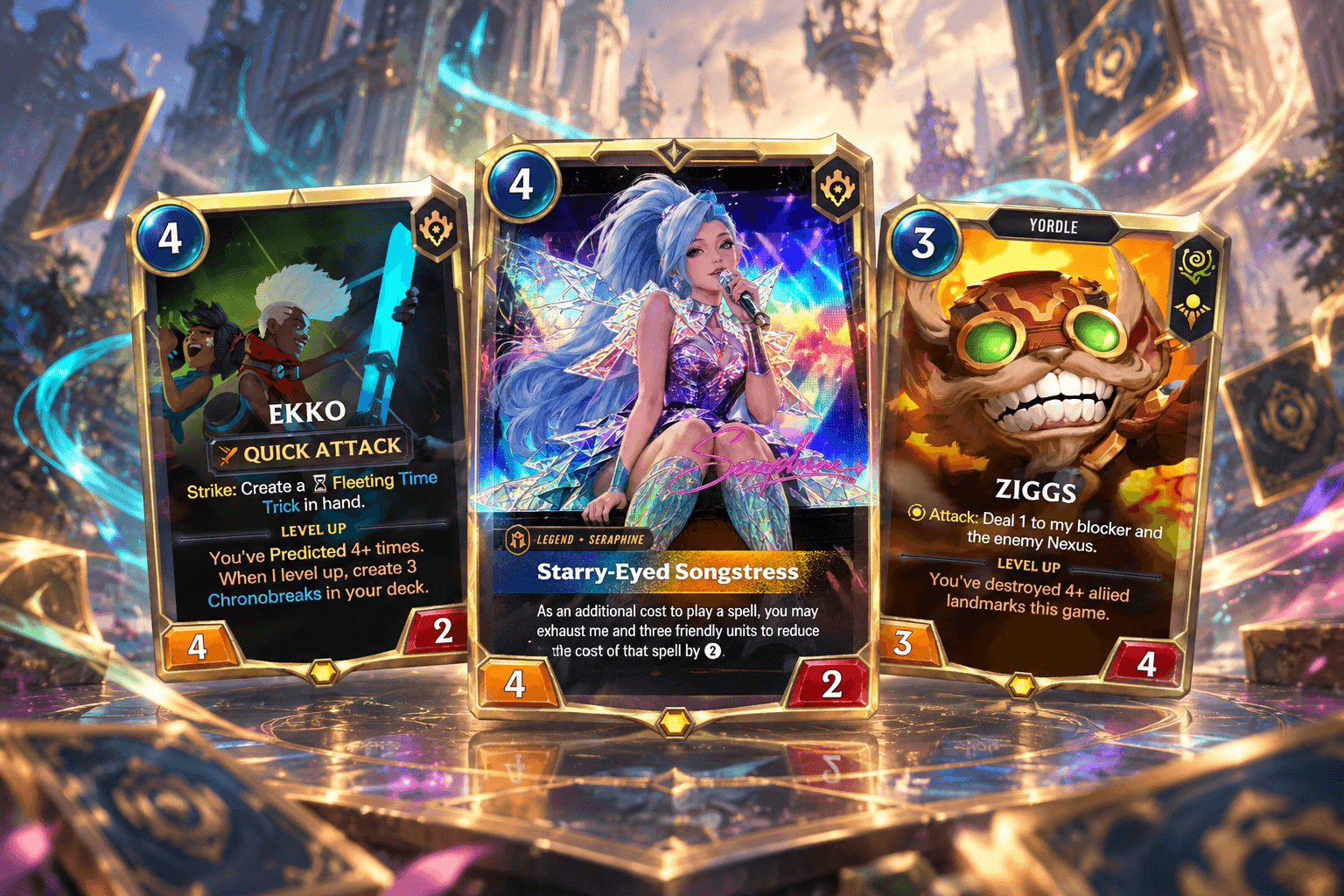
Riftbound's Nine Radiance Legends: Seraphine, Ziggs, Jarvan IV, Ekko and More
Eight of the nine Legends are public, but only two have revealed abilities. What each one does, what is still just artwork and a name, and why a Legend is not a Champion Unit.
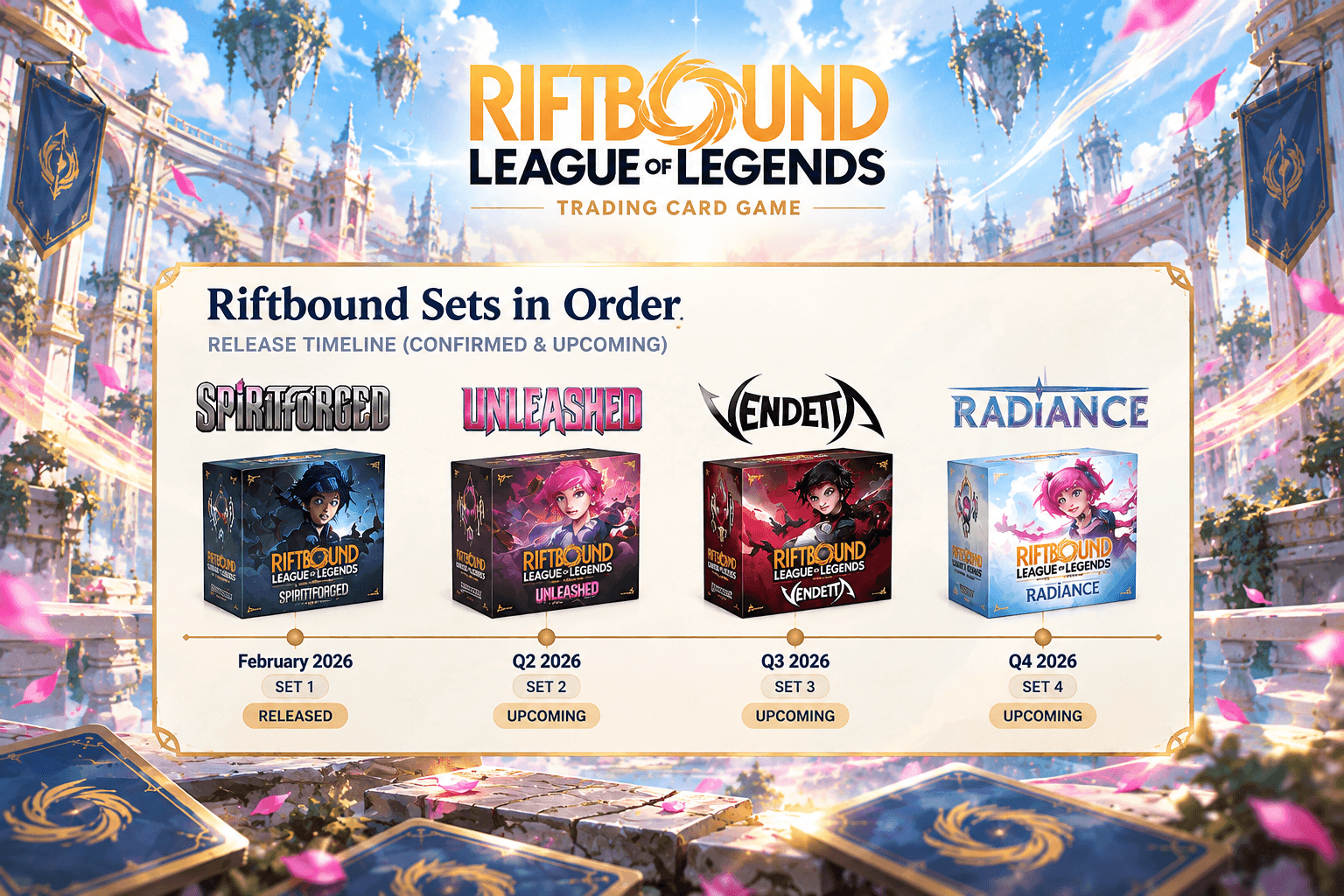
Every Riftbound Set in Order: Origins to Radiance
Five sets in under twelve months, with four more already dated through 2027. Every Riftbound release in order, and the roadmap signal hiding in Legacy's 346-card count.
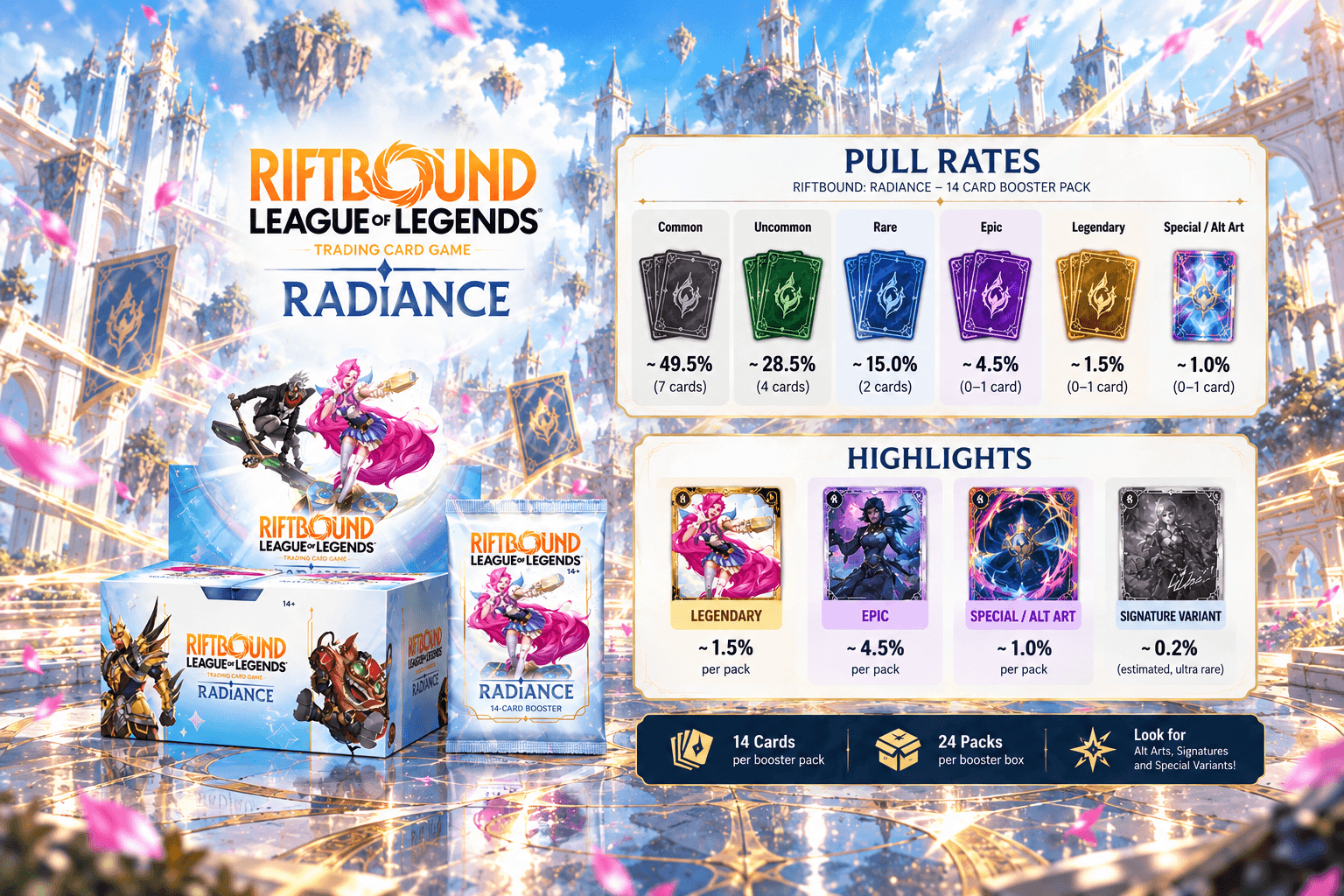
Riftbound Radiance Pull Rates Explained
Radiance has exactly one published pull rate. This guide separates that confirmed figure from the Origins numbers people are quoting as though they apply to this set.
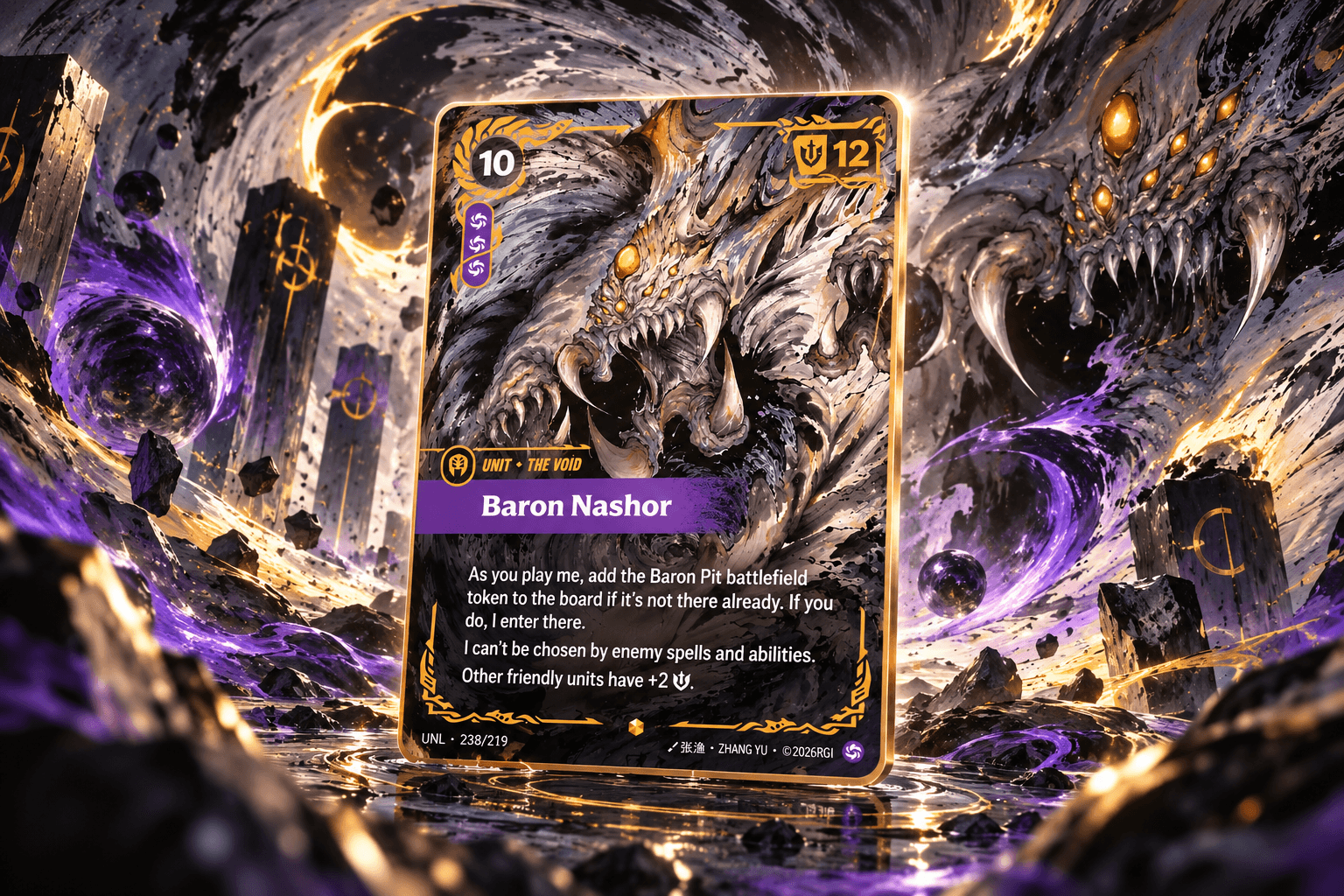
What Is a Radiance Ultimate Rare? Riftbound's New Rarity Explained
One pack in four thousand. Roughly 167 booster boxes. And with three weeks to launch, nobody outside Riot has seen the card. A look at the scarcest print Riftbound has made.
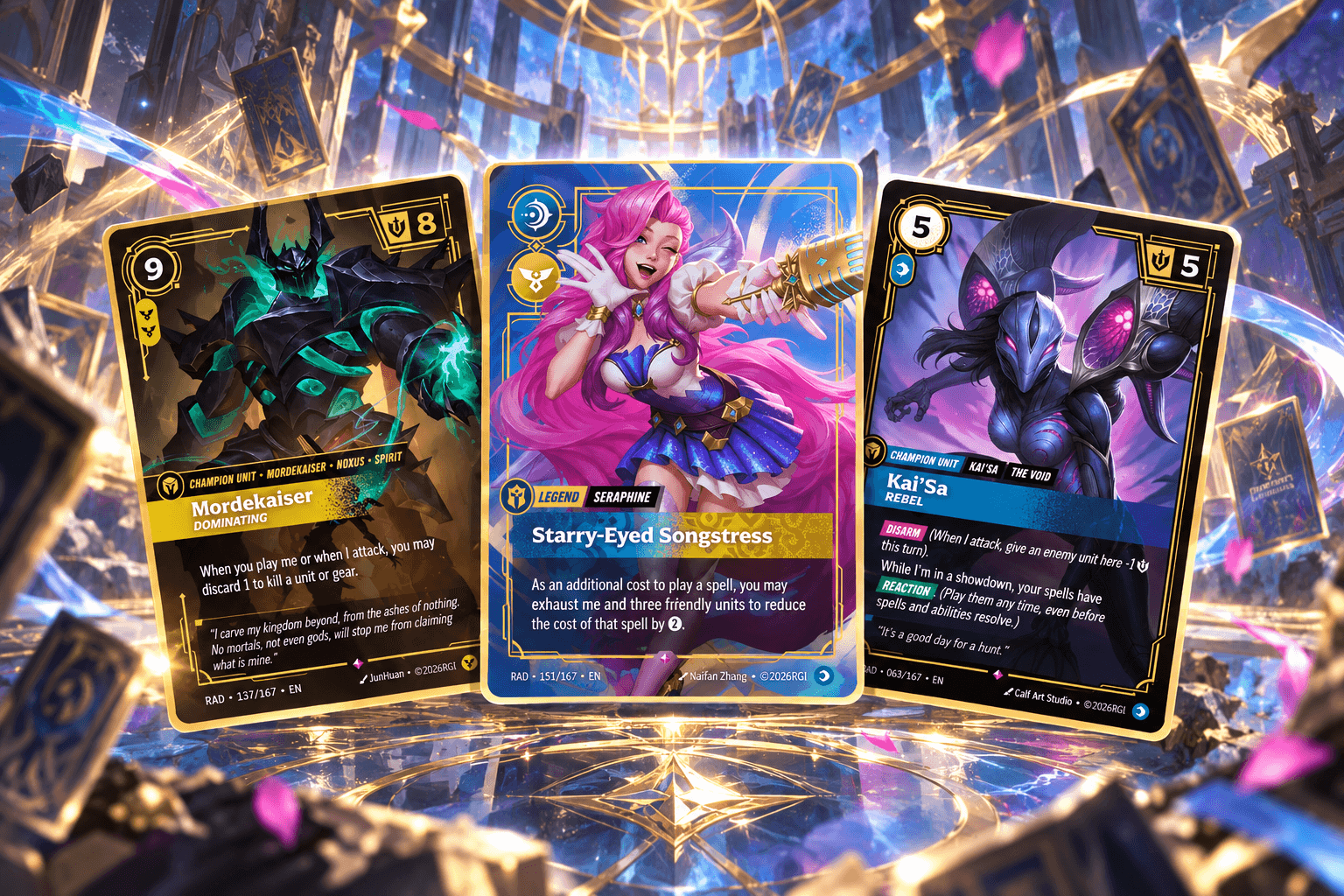
Riftbound Radiance Card List: Every Card Revealed So Far
Ninety-five of 180 cards are public and the rest arrive before 9 October. A running checklist of what's confirmed, what's still hidden, and why we won't fill the gaps with guesses.
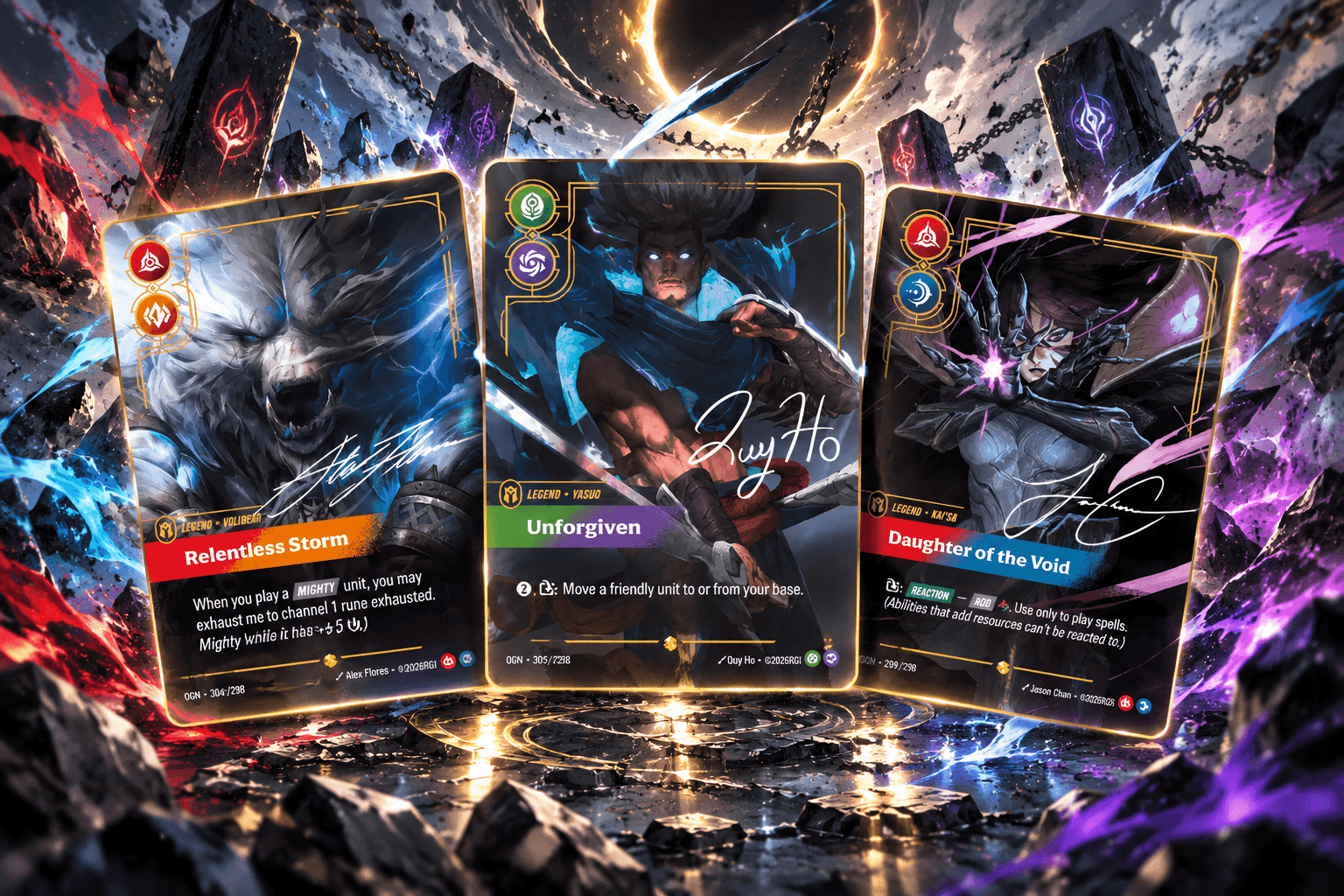
Riftbound Radiance Chase Cards: What to Pull For
One card you will almost certainly never pull, and 66 you reasonably might. Every Radiance chase target ranked by how obtainable it actually is, not how good it looks.