Riftbound's Deploy Keyword Explained
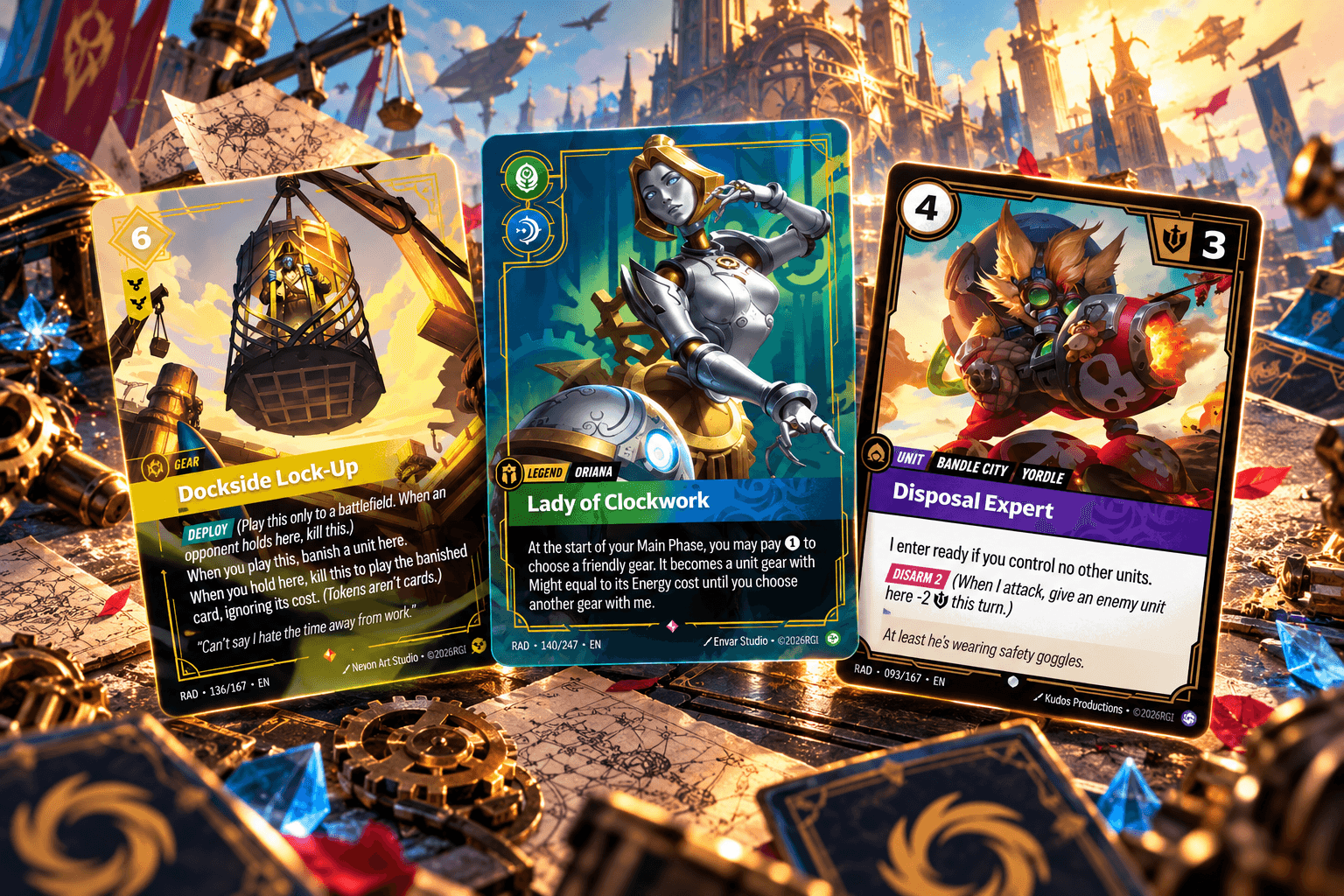
Deploy breaks the rule every other Gear card follows. Instead of attaching to a Unit, a Deploy card goes directly onto a Battlefield, and it's destroyed if your opponent takes control of that space.
That single change turns Gear from a unit upgrade into a territory bet. It's one of three new keywords arriving with Mega Evolution's rival set, Radiance, on 23 October 2026.
This guide covers what Deploy does, why the destruction clause matters more than the benefit, and how to play around it. Mechanic details come from riftbound.gg.
How Gear normally works
Worth a sentence of grounding, because Deploy only makes sense against the default.
Gear is equipment. You attach it to one of your Units, it modifies that Unit, and it travels with it. If the Unit dies, the Gear typically goes with it. The card's fate is tied to a body you control.
That makes normal Gear a unit-protection problem. Keep the Unit alive and you keep the value.
What Deploy changes
A Deploy card never touches a Unit.
You play it onto a Battlefield, where it provides its benefit for as long as it sits there. There's no carrier to protect and no attachment to track.
The cost is the destruction clause: if your opponent controls that Battlefield, the Deploy card is destroyed.
So the card's survival depends on holding territory rather than keeping a creature alive. You've swapped one vulnerability for a completely different one.
Why that trade is interesting
Three things follow from the swap, and they're what make Deploy worth building around.
Removal doesn't answer it. An opponent holding unit removal can't touch a Deploy card directly. They have to win the Battlefield instead, which is a different kind of effort.
It survives your own losses. If your Units die, normal Gear dies with them. A Deploy card doesn't care, as long as you still hold the space.
It rewards decks that already contest ground. If your deck is built to take and hold Battlefields, Deploy is close to free value. If it isn't, you're paying for a benefit you can't keep.
That's a real build-around rather than a generically good keyword, which is the pattern Radiance repeats across its new mechanics.
The risk nobody mentions in previews
Here's the part worth being blunt about.
A Deploy card is a resource your opponent can take without ever interacting with it. They don't need removal, they don't need to target it, and they don't need to know it's there. They just need to win the Battlefield.
That makes Deploy a tempo liability in the wrong matchup. Against a deck that contests ground aggressively, you may spend a card to gain a benefit for a single turn before losing both.
Compare that to normal Gear, where at least your opponent has to deal with the Unit first. Deploy removes that buffer.
How Deploy fits Radiance's other new mechanics
Radiance introduces three keywords and two card types, and they aren't isolated from each other.
Disarm reduces an enemy Unit's Might during an attack, with effects stacking. That's a combat tool, which matters because combat is how Battlefields change hands.
Reveal and Show Off lets you reveal qualifying cards from hand or board to unlock extra effects.
Equipment Units are Gear that can become Units through Orianna's ability, auto-unequipping first. That's the opposite direction of travel from Deploy: one turns Gear into a body, the other plants Gear in the ground.
Disarm is the one that interacts most directly with Deploy, since winning combat is how Battlefields change hands. The Radiance Legends guide covers Orianna and the Equipment Unit connection.
What we still don't know
Being clear about the gaps matters, because Radiance is still in preview.
Riot has published what Deploy does, but not the full list of Deploy cards. As of early October, 95 of the set's 180 cards were public, with preview season closing 9 October. The community tracker at riftbound.zone and RiftCompare's set page are both logging reveals daily.
Specific open questions:
- How many Deploy cards exist in the set
- Whether Deploy cards can be moved between Battlefields once placed
- Whether destruction is immediate on losing control, or checked at a specific timing
- Whether any card protects a Deploy card from the destruction clause
Expect those answers in the final preview days or with the full card list. Our Radiance card list tracks what's been confirmed.
How to think about Deploy before release
Three practical conclusions from what's known.
Treat it as a payoff, not a plan. Deploy rewards a deck already built to hold Battlefields. It doesn't make a deck that can't hold them suddenly able to.
Count your Battlefield pressure first. If you can't reliably contest ground, a Deploy card is a card your opponent removes for free.
Expect it to look stronger in preview than in practice. Keywords that read as pure upside usually have a cost buried in the text, and here the cost is right there in the destruction clause.
For how Radiance fits the wider game, our guide to every Riftbound set in order covers the five sets released so far.
How JK Index helps
We index the full Riftbound catalog with sold history for every printing, including Gear and Battlefield cards that most price sites treat as an afterthought.
Keyword cards are usually mispriced at release, because the market takes weeks to work out whether a new mechanic is strong. Tracking them from day one is the only way to see that repricing happen. You can browse earlier sets including Origins, Spiritforged, Unleashed and Vendetta, track what you own in your portfolio, or check listings on the marketplace.
The takeaway
Deploy puts Gear on a Battlefield rather than a Unit, giving a benefit while you hold the space and destroying the card when you lose it.
That makes it immune to unit removal and vulnerable to something most decks are already doing: taking ground. Whether it's strong depends entirely on whether your deck can hold a Battlefield, which is a question about your whole list rather than about the keyword.
FAQ
What does Deploy do in Riftbound?
Deploy places a Gear card directly onto a Battlefield instead of attaching it to a Unit. It provides a benefit while it sits there and is destroyed if your opponent takes control of that Battlefield.
Is Deploy Gear attached to a Unit?
No. That's the whole point of the keyword. Normal Gear attaches to a Unit and travels with it, while a Deploy card sits on a Battlefield independently of any Unit you control.
Can removal destroy a Deploy card?
Not directly. Because it isn't attached to a Unit, unit removal doesn't reach it. An opponent has to take control of the Battlefield it sits on instead.
What happens to a Deploy card if I lose the Battlefield?
It's destroyed. That's the built-in cost of the keyword, and it's why Deploy suits decks that can reliably hold ground rather than decks that can't.
Which set introduces Deploy?
Radiance, Riftbound's fifth set, releasing 23 October 2026. It arrives alongside two other new keywords, Disarm and Reveal and Show Off, plus two new card types.
How many Deploy cards are in Radiance?
Not published. Riot has confirmed how the keyword works but not the full list of cards carrying it, and roughly half the set was still unrevealed in early October.
Is Deploy good?
It depends on your deck. It's immune to unit removal, which is a genuine strength, but it hands your opponent a free answer if they can contest Battlefields and you can't.
Does Deploy work with Equipment Units?
They pull in opposite directions. Equipment Units turn Gear into a Unit through Orianna's ability, while Deploy plants Gear on a Battlefield, so a card is unlikely to do both.