Sinistea Card Value 2026: Every Print Compared
Published by JK Index · Updated September 2026
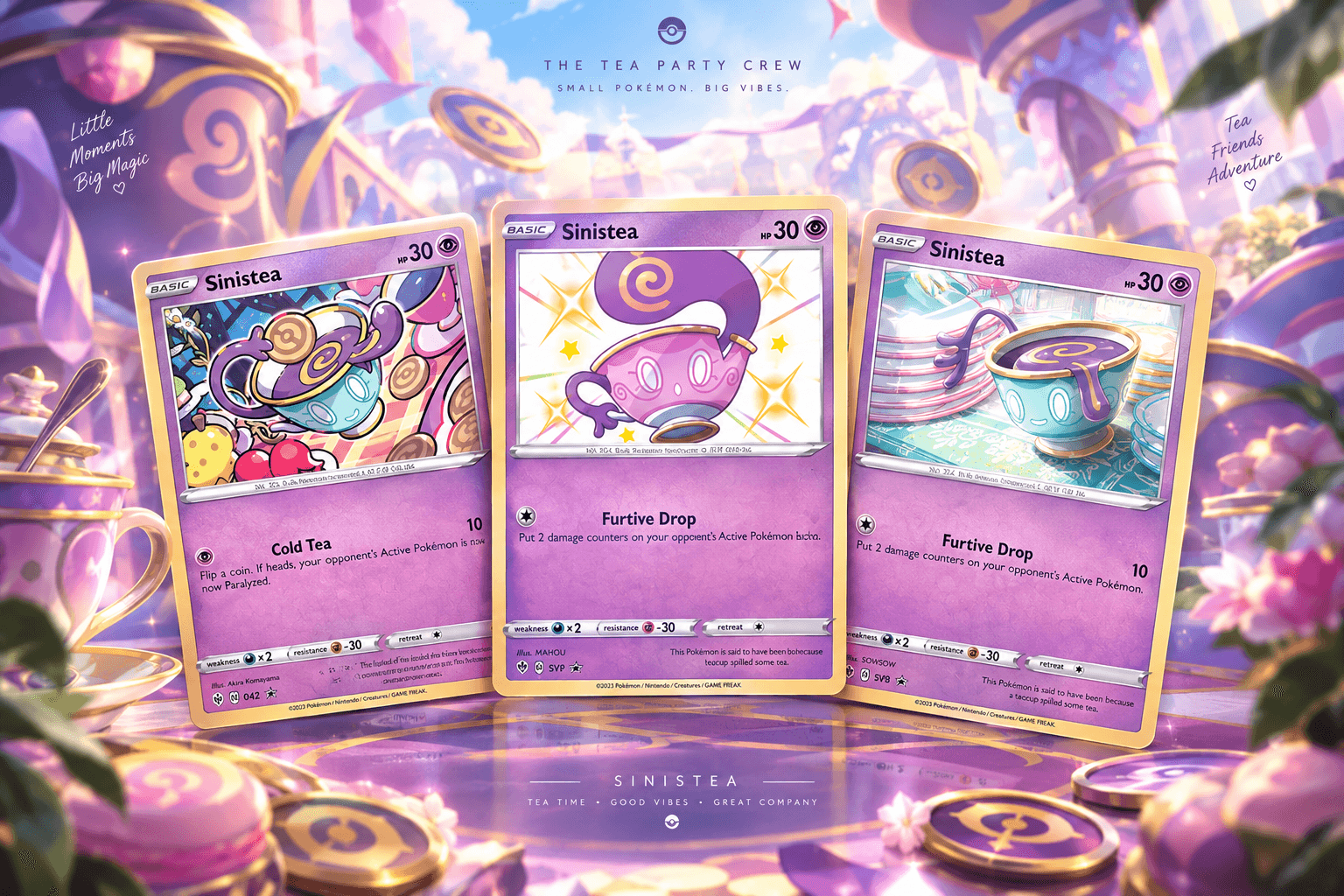
Sinistea is not the kind of Pokemon that shows up on most collectors' radar. No EX treatment. No V or VMAX. No Special Illustration Rare with a five figure PSA 10 comp. The entire Sinistea catalog trades under $3 raw at every variant except one seasonal promo, and the character has never appeared in a set older than 2020.
None of that stops Sinistea from being one of the more interesting micro collecting targets in the modern TCG. The haunted teacup from the Galar region has built a quiet cult following among Ghost type enthusiasts, Yuka Morii clay model collectors, and British culture themed Pokemon fans who specifically chase the teapot aesthetic. Pokemon Wizard tracks the character across multiple sets with an average card price well under $1. Cardmarket lists over 5,800 available Obsidian Flames copies alone.
This is not a guide about chasing grails. This is a guide about understanding a micro collection where the appeal is entirely aesthetic and thematic, and where every card in the catalog costs less than a cup of coffee.
What Sinistea actually is
Sinistea is Pokedex #854, a pure Ghost type Pokemon introduced in Generation VIII as part of the Galar region in Pokemon Sword and Shield. The design is a haunted teacup, a direct reference to British tea culture that ties into the Galar region's United Kingdom inspiration. The character evolves into Polteageist using a Cracked Pot or Chipped Pot item, continuing the ceramics motif through the entire evolution line.
The franchise lore adds a layer that collectors find compelling. Sinistea is described as a human soul trapped inside antique tableware, with two distinct forms in the video games. The Phony Form is the common variant, while the Antique Form carries a small mark of authenticity on the bottom of the cup. That phony versus authentic mechanic translates directly into the collector mentality around the character, even though the TCG itself has not mechanically distinguished between the two forms on any printed card.
Sinistea first appeared in the TCG in the Sword and Shield base set in February 2020. Since then, the character has been printed in Darkness Ablaze, Shining Fates Shiny Vault, Obsidian Flames, Trick or Trade promotional sets, and the Scarlet and Violet Black Star Promos. Polteageist has appeared in parallel across many of the same sets.
Every Sinistea print ranked by value 2026
Pricing pulled from TCGplayer market pricing, Cardmarket, Sports Card Investor, and eBay listings as of September 2026.
| Rank | Card | Set | Raw NM | Notes |
|---|---|---|---|---|
| 1 | Sinistea SV052 Shiny Rare | Shining Fates Shiny Vault | $1.80 to $2.40 | Character's ceiling card |
| 2 | Sinistea #097/197 (Yuka Morii) | Obsidian Flames | $0.13 to $0.20 | Clay model art, cult favorite |
| 3 | Sinistea SVP 053 Promo | SV Black Star Promos | $0.25 to $0.40 | Promo distribution |
| 4 | Sinistea #125 | Obsidian Flames | $0.10 to $0.17 | Standard print |
| 5 | Sinistea #082/189 | Darkness Ablaze | $0.06 to $0.10 | First English print |
| 6 | Sinistea #097/202 | Sword and Shield Base | $0.08 to $0.12 | Debut appearance |
| 7 | Sinistea Trick or Trade | Trick or Trade 2022/2023 | $0.08 to $0.15 | Halloween promo reprint |
The entire English language Sinistea catalog fits in a single table because that is genuinely how small the print history is. No card in the character's catalog exceeds $3 raw at any variant. The Shining Fates Shiny Vault print is the only variant that commands meaningful collector premium above bulk pricing.
Shining Fates Shiny Vault Sinistea value 2026
The Shining Fates Shiny Vault Sinistea SV052 is the character's ceiling card, and the pricing reflects the broader Shining Fates Shiny Vault dynamics rather than Sinistea specific collector demand. Raw pricing sits at $1.80 to $2.40 on TCGplayer, which represents a meaningful premium over every other Sinistea variant in the catalog.
Sports Card Investor tracks this as one of the two Sinistea cards worth monitoring for price movement. The Shiny Vault treatment delivers an alternate color palette that distinguishes the card visually from every other Sinistea print, and the Shining Fates set has seen broader appreciation as sealed product becomes scarcer on the secondary market.
The grading case on Shiny Vault Sinistea is straightforward. PSA 10 comps for Shining Fates Shiny Vault commons and uncommons generally trade at $15 to $25 depending on the specific character. At a raw cost of $2 and a grading fee of $20 to $30, the math only works if you are building a complete Shining Fates Shiny Vault PSA 10 set and need the card for completion purposes. Grading a single Sinistea Shiny Vault for profit does not clear the math at current pricing.
The Yuka Morii clay model Sinistea
The Obsidian Flames Sinistea #097/197 deserves specific attention for a reason that has nothing to do with pricing. The card was illustrated by Yuka Morii, who is the TCG's most recognized clay model artist. Morii creates physical clay sculptures of Pokemon, photographs them, and those photographs become the card illustrations. The result is a tactile, three dimensional quality that no digital illustration can replicate.
Yuka Morii clay model cards have developed a dedicated sub collector audience within the broader Pokemon TCG community. Collectors who specifically chase Morii illustrations will seek out every clay model card across the entire TCG catalog, and Sinistea's teacup design translates particularly well to the clay medium. The tiny haunted cup rendered in physical clay carries a charm that digital art treatments cannot match.
At $0.13 raw, the Obsidian Flames Morii Sinistea is functionally free. But for Morii completionists, this card is a required pickup that serves a collection purpose well beyond its market value. That disconnect between market price and collector significance is exactly what makes micro collecting targets like Sinistea interesting.
Sinistea and the Polteageist evolution line
Collecting Sinistea in isolation misses half the picture. Polteageist, the evolution, has appeared across the same sets and adds roughly a dozen more cards to the full family catalog. The most notable Polteageist variants include the Darkness Ablaze print at $0.30 raw and the Trick or Trade reprints at similar pricing.
Neither Sinistea nor Polteageist has ever received an EX, GX, V, VMAX, or any elevated rarity treatment in the English TCG. That absence is what keeps the entire evolution line at commons and uncommons tier pricing. It also means the line has never been a pack chase target, which paradoxically makes clean copies easier to find since they were never the card that people handled aggressively during pack openings.
For Ghost type enthusiasts building a comprehensive collection, the Sinistea and Polteageist line sits alongside Gengar, Chandelure, and Mimikyu as essential representation. Cross reference the Every Gengar Card Variant guide for the other end of the Ghost type spectrum where pricing reaches into the hundreds.
Why people collect Sinistea despite zero investment value
Three dynamics explain why Sinistea maintains a cult collector audience despite pricing that would register as bulk on any investment screener.
The British cultural reference. Galar region collectors who value the United Kingdom theming of Generation VIII specifically chase cards that reflect British culture. A haunted teacup is peak Galar aesthetic, and that cultural specificity resonates with a collector base that cares about regional identity in their collection.
The Phony versus Antique lore. The video game mechanic where Sinistea exists in two forms, one common and one rare, maps directly onto collector psychology. Even though the TCG does not distinguish the forms on printed cards, the lore creates a storytelling hook that collectors build personal narratives around. That narrative engagement keeps the character relevant beyond pure market pricing.
Yuka Morii cross collection appeal. The Obsidian Flames clay model illustration pulls in Morii completionists who would otherwise never engage with a sub dollar Ghost type common. That cross collection pull is a real demand driver at the margins, even if it does not move pricing in measurable terms.
Should you grade any Sinistea card in 2026?
In almost every case, no. The grading math does not work for any Sinistea variant at current pricing levels.
The Shining Fates Shiny Vault print at $2 raw is the only candidate worth considering, and even then the economics require PSA 10 comps in the $20 to $25 range to clear a $25 all in grading fee. That leaves essentially zero margin for profit. Grade only if you are building a complete Shining Fates Shiny Vault graded set and need the Sinistea slot filled.
For every other Sinistea variant, the raw card costs less than the envelope you would mail it to PSA in. Keep them sleeved in a binder. The value here is personal collection, not financial return. Cross reference the grading fees guide for broader context on when grading makes economic sense versus when it does not.
How to build a complete Sinistea collection in 2026
One of Sinistea's genuine collecting advantages is that the full character set is achievable at trivial cost. Here is what a complete English language Sinistea collection looks like.
Every English Sinistea variant across Sword and Shield base, Darkness Ablaze, Shining Fates Shiny Vault, Trick or Trade (both years), Obsidian Flames (both prints), and the SV Black Star Promo totals roughly seven to eight unique cards depending on how you count Trick or Trade reprints. Total acquisition cost for the full set in raw NM condition runs approximately $5 to $8.
Adding the Polteageist evolution line across matching sets roughly doubles the card count and adds another $4 to $6. A complete Sinistea and Polteageist English language collection in raw NM condition can be assembled for under $15 total.
That accessibility is the entire point. Sinistea rewards collectors who value completeness over scarcity. You can own every printed version of this character for less than the cost of a single booster pack.
The Sinistcha connection for Paldea collectors
Generation IX introduced Sinistcha (Pokedex #1013), a Grass/Ghost type that carries the tea theme forward into the Paldea region with a matcha inspired design. Sinistcha is not an evolution of Sinistea, but the thematic connection is obvious and many tea themed collectors chase both lines together.
Sinistcha cards range from $0.09 to $35 raw on TCGplayer, with meaningfully higher ceiling pricing than Sinistea due to the ex treatment that Sinistcha received in the Scarlet and Violet era. For collectors who started with Sinistea's Ghost type teacup aesthetic, Sinistcha extends the theme into a higher rarity tier with genuine chase card positioning. Cross reference the Shrouded Fable set page for context on where Paldea era Ghost type cards sit within the current set catalog.
Conclusion
Sinistea is a collecting target that operates entirely outside normal TCG value frameworks. No vintage provenance. No chase rarity. No meaningful grading upside. The entire character catalog costs under $10 to complete, and the most expensive single card barely clears $2 raw.
What Sinistea does offer is aesthetic coherence, cultural specificity, and a completionist satisfaction that expensive characters cannot replicate. You can own everything. Every print, every variant, every version of the haunted teacup that exists in the English TCG. That kind of total collection achievability is genuinely rare in a hobby where most popular characters require four figure budgets to collect comprehensively.
For Ghost type collectors, Yuka Morii enthusiasts, and Galar region completionists, Sinistea belongs in the binder. For investors, look elsewhere. Cross reference the reverse holo collecting guide for broader context on where low value cards can still carry meaningful collecting weight, and check current pricing on JK Index before purchasing.
Frequently Asked Questions
How much is a Sinistea card worth in 2026?
Most Sinistea cards trade between $0.06 and $0.25 raw. The most valuable variant is the Shining Fates Shiny Vault Sinistea SV052 at $1.80 to $2.40 raw. The entire English language Sinistea catalog can be purchased for under $8 total.
Does Sinistea have an EX or rare card?
No. Sinistea has never received an EX, GX, V, VMAX, or any elevated rarity treatment in the English Pokemon TCG. Every Sinistea card printed to date has been at the common or uncommon tier. Its evolution Polteageist has similarly never received a premium rarity printing.
Is the Yuka Morii Sinistea card valuable?
The Yuka Morii clay model Sinistea from Obsidian Flames trades at $0.13 raw, so it carries no meaningful financial value. However, it holds significant collector value among Yuka Morii illustration completionists who specifically chase clay model cards across the entire TCG catalog. The card's artistic merit far exceeds its market price.
What is the difference between Sinistea and Sinistcha?
Sinistea (Pokedex #854) is a Ghost type Pokemon from the Galar region introduced in Generation VIII. Sinistcha (Pokedex #1013) is a Grass/Ghost type from the Paldea region introduced in Generation IX. They share a tea themed aesthetic but are not related through evolution. Sinistcha has received ex treatment with cards trading up to $35 raw, giving it meaningfully higher ceiling pricing than Sinistea.
How many Sinistea cards are there?
The English language TCG contains approximately seven to eight unique Sinistea cards across Sword and Shield base, Darkness Ablaze, Shining Fates Shiny Vault, Trick or Trade (2022 and 2023), Obsidian Flames (two prints), and the SV Black Star Promo. Japanese and other language printings add additional variants. Cardmarket alone lists over 5,800 available copies of the Obsidian Flames print.
Is Sinistea worth collecting?
Sinistea is worth collecting if you value aesthetic completeness, Ghost type representation, or Galar region theming over financial return. The entire character collection costs under $10 to assemble, making it one of the most affordable complete character sets in the modern TCG. It is not an investment target by any measure.