One Piece Manga Art Cards Explained: Printings and Price Checks
Two One Piece cards can share a character name and card number without being the same collectible. Before comparing a manga-art card with a base or alternate-art version, identify the exact artwork, language and printing.
This guide explains how to make that match and avoid misleading price comparisons. It is an identification guide, not a current price ranking.
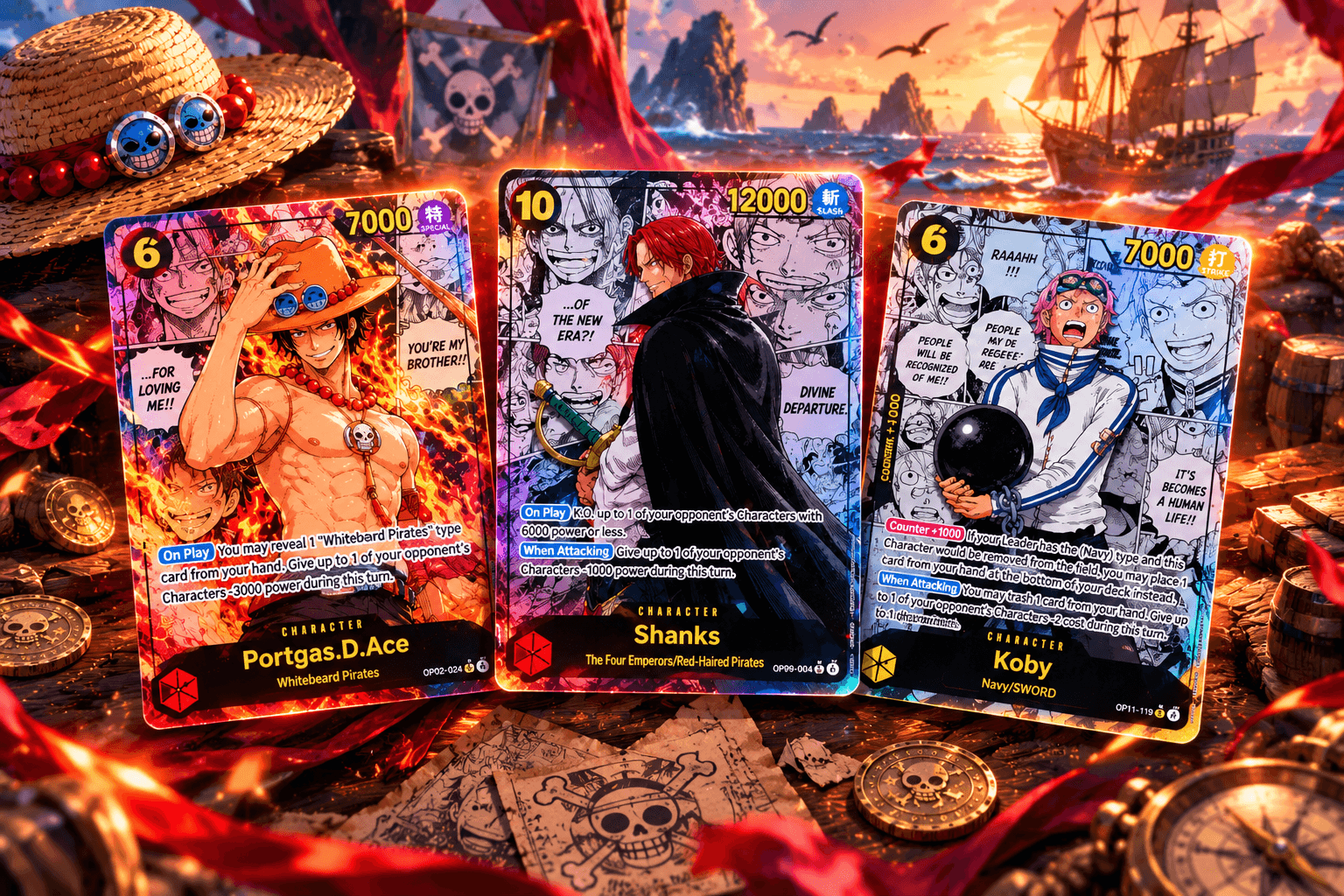
What manga art looks like
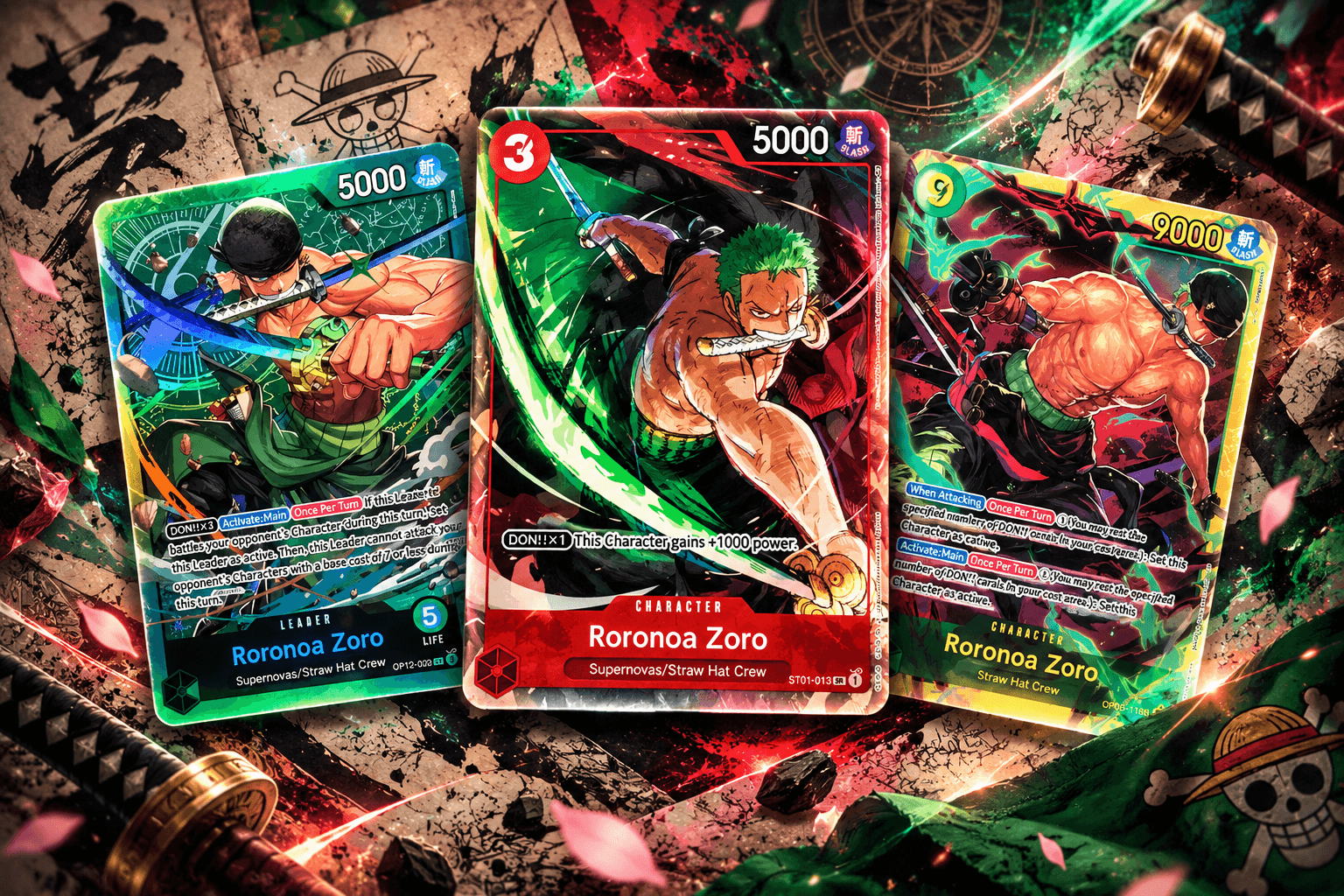
The manga-panel treatment combines character artwork with a background of manga panels. In Bandai’s official PRB-01 card images, Roronoa Zoro OP06-118 and Monkey D. Luffy OP05-119 show colored characters over black-and-white panel collages. The entire card is not simply one unaltered historical manga panel.
Compare the images in Bandai’s official PRB-01 card list. An artwork comparison can establish what is visibly printed; it does not establish a pull rate, print run or the chapter provenance of every panel.
The card number is only the starting point
A printed number identifies the underlying card, not every artwork treatment or later printing. Do not assume that a number ending in 118, 119 or 120 proves a manga treatment.
Use this checklist before selecting a price record:
| Detail | What to match |
|---|---|
| Character and card number | Both must agree with the card in front of you. |
| Artwork | Compare the complete image, not just a seller’s “manga” label. |
| Language | Keep English and other-language printings separate. |
| Product and printing | Check the product card list; an older card number can appear in a later product. |
| Condition | Compare ungraded cards with similar condition, or the same grading company and grade. |
A listing title alone is not enough when it leaves the printing unclear. Ask for clear front and back photographs before treating it as an exact match.
Why PRB-01 matters when identifying a card
Bandai describes Premium Booster: One Piece Card The Best as containing cards from earlier boosters and alternate-art illustrations. Its official card list includes OP05-119 and OP06-118, even though the product is PRB-01.
That is why the prefix on a card cannot, by itself, tell you which product supplied a particular printing. When a listing claims an original or a reprint, verify that claim against the artwork and product reference. Do not assign a price premium solely from the printed code.
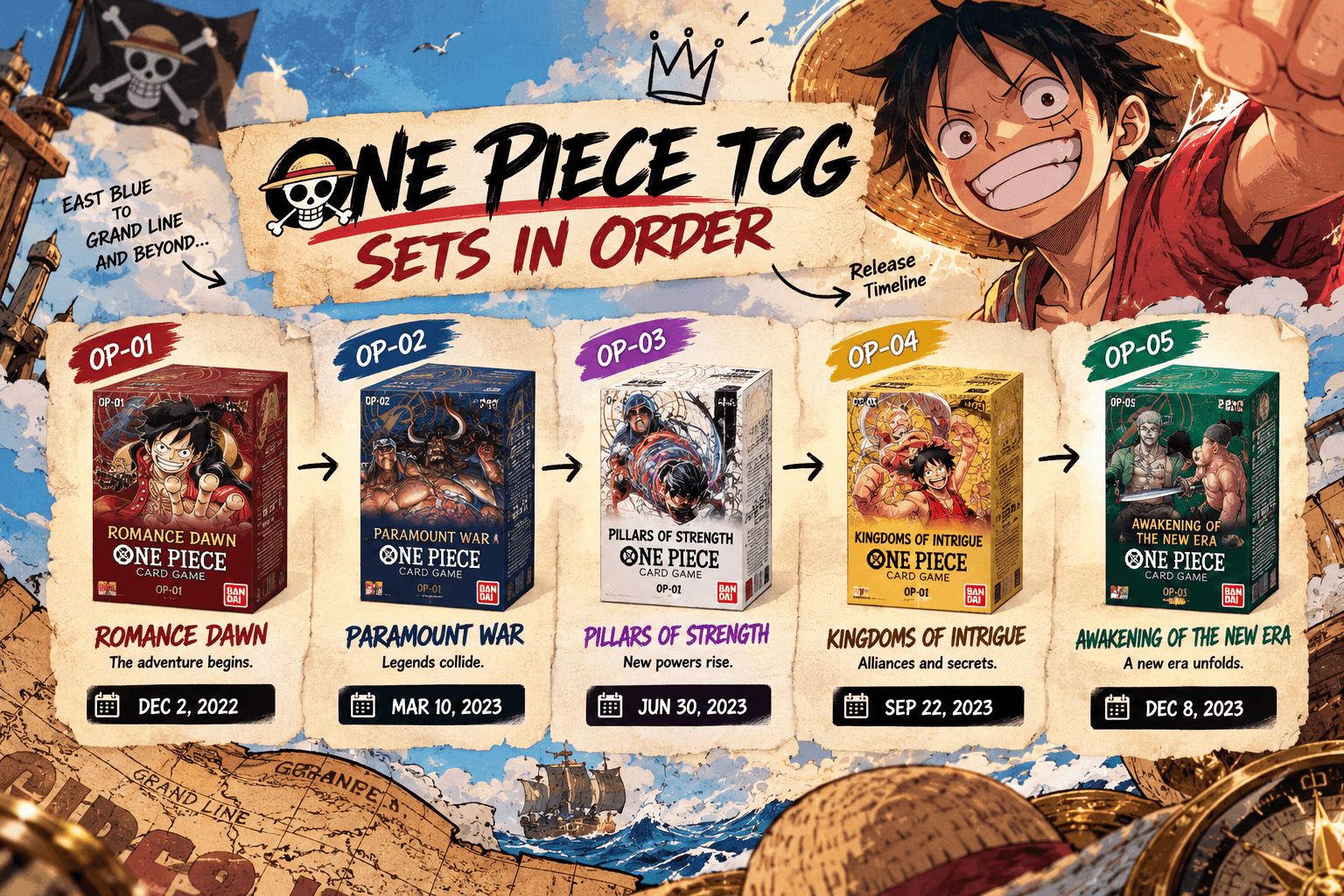
For the broader release sequence, see every One Piece TCG set in order.
How to check a manga card’s price
Start with the exact printing, then compare recent completed sales where that evidence is available. Keep asking prices separate: an unsold listing does not show what a buyer paid.
For each comparison, record the sale date, currency, condition or grade, and whether shipping is included. Exclude lots, different languages and unclear variants unless you can separate them reliably. A single unusually high sale should not stand in for the whole market.
An aggregate estimate is different from an individual completed sale. Check the source and observation date before treating either as current. If the exact printing has little recent evidence, say so rather than substituting a similar-looking card.
Why one treatment can cost more than another
A buyer may value the character, artwork and condition differently, and available supply can differ between printings. Those are factors to investigate, not proof of a fixed manga premium.
The image treatment alone does not establish scarcity. This guide does not claim a verified pull rate or print quantity, that manga cards top every set’s prices, or that every main set includes the treatment. Check the specific product and exact printing instead.
Comparing raw and graded cards
Keep raw cards and graded cards in separate comparisons. A PSA 9 estimate below a raw estimate does not establish that a PSA 9 card is damaged: the records may cover different dates, populations or condition assumptions.
If you are considering grading, compare the same printing and account for fees, shipping, the uncertain grade outcome and available sale evidence. A listed PSA 10 value is not a guaranteed result for your card.
Finding a version within your budget
Compare base and non-manga alternate-art versions of the same character as separate options. Do not assume the least expensive manga card today will remain the least expensive, or that a reprint is always cheaper.
Set a budget using evidence for the specific copy you are considering, not a universal ranking or an old headline price.
How JK Index helps
Browse available records in the One Piece catalog. Pricing and sold-history coverage vary by card and printing. Confirm the record matches your card before using its figures; missing history does not mean a card has no value.
You can also browse Romance Dawn, Awakening of the New Era, Wings of the Captain and Emperors in the New World, track your collection in your portfolio, or review asking prices on the marketplace.
FAQ
Can a card number prove that a card is manga art?
No. Match the artwork, language and exact printing as well as the number. Different treatments can share a code.
Is manga art just one original manga panel on a card?
Not in the two official examples reviewed here. The PRB-01 Zoro OP06-118 and Luffy OP05-119 images combine colored character artwork with manga-panel backgrounds.
Does an OP code rule out a Premium Booster printing?
No. Bandai’s PRB-01 list includes cards with earlier OP codes. Check the product list and exact image rather than inferring the printing from the prefix.
Which manga card is most expensive or cheapest?
That requires a dated comparison of verified, matching printings. This guide does not publish a current ranking or an unsupported price table.
Does every One Piece set include manga art?
Do not assume so from the OP numbering. Check the official card list for the specific product.
Reviewed 16 November 2026. Earlier numerical price comparisons have been removed because their dated source evidence could not be verified.