Rare Pokémon cards: what scarcity tells you that a sale price can’t
Two Pikachu ex cards in Ascended Heroes have the same name, the same rarity designation and different artwork. One English Near Mint copy of #276/217 sold for $509.98 in November 2026; one #277/217 sold for $192.82. Those sales tell you what two buyers paid. They don’t tell you which card was printed in smaller numbers.
To judge how rare a Pokémon card is, start with the kind of evidence available: how copies were distributed, how many a grader has recorded at a particular grade, or what an identifiable copy sold for. Here’s how to use each without turning unlike measurements into a single ranking.
Awarded copies: Pikachu Illustrator
Guinness World Records reports that 39 Pikachu Illustrator cards were given to illustration contest winners in 1998. That is a count of awards, not a count of surviving copies. It doesn’t establish that exactly 39 exist today.
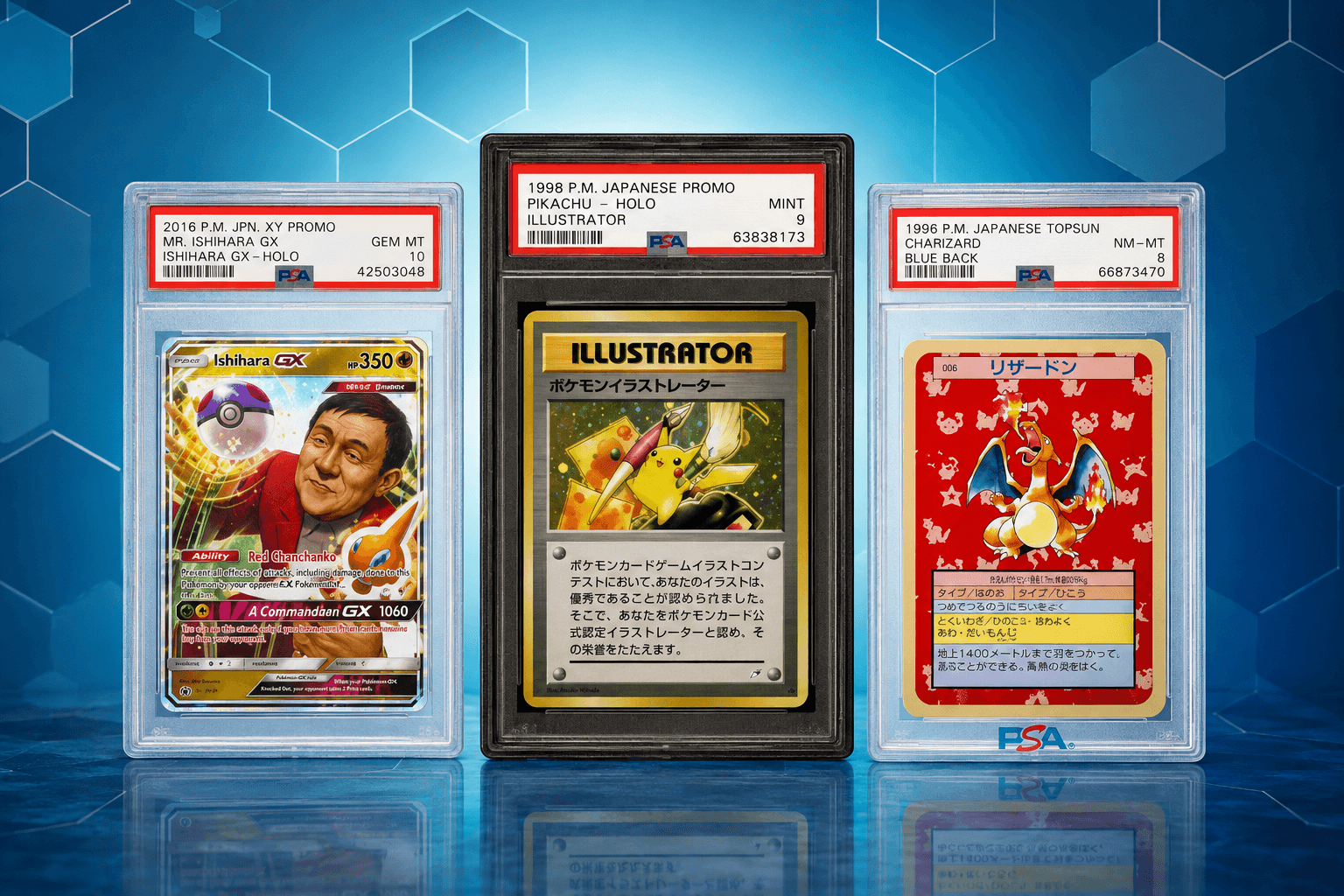
There is also a precisely documented price. On February 16, 2026, one PSA Gem Mint 10 Pikachu Illustrator sold through Goldin for $16,492,000, including the buyer’s premium. That result belongs to that particular graded copy. The Illustrator on this guide’s cover is labeled Mint 9; it is not the record-setting lot.
Tournament rewards: Celebratory Fanfare
The Play! Pokémon Ace Trainer version of Celebratory Fanfare is a tournament reward, not an Ascended Heroes booster pull. For the 2026 Championship Series, Pokémon set the Ace Trainer threshold at 200 Championship Points in an eligible rating zone. That tells you how a player qualified, not how many copies were distributed. Pokémon also announced a stamped reward for the 2025 season. Match the season and stamp before comparing sales. Opening Ascended Heroes packs is not a way to obtain this reward.
Grade populations: which Base Set Charizard?
A grading population answers a narrower question: how many examples does this grader report for this printing at this grade? PSA maintains separate entries for Base Set Charizard #4 in 1st Edition and Shadowless. Both are #4: the collector number alone won’t identify the right comparison.
When recording a population, note the exact label, grade, grading company and lookup date. A PSA 10 count leaves out lower grades, ungraded copies and cards graded elsewhere. It is not the print run. For a price comparison, match the edition and grade again rather than borrowing the highest result from the other entry.
Dated prices: five Ascended Heroes printings
The table shows one completed sale per printing in the Ascended Heroes set. Each source lists the transaction as English, Near Mint, ungraded, sold through TCGplayer. Dates are in 2026 and prices are in US dollars. Examples were chosen for identifiable card numbers and condition, not because they were the highest sales.
| Exact printing | Sale date | Recorded sale | Sale history |
|---|---|---|---|
| Mega Gengar ex 284/217 | Nov 14 | $519.98 | Mega Gengar ex #284 sales |
| Pikachu ex 276/217 | Nov 15 | $509.98 | Pikachu ex #276 sales |
| Mega Dragonite ex 290/217 | Nov 19 | $368.25 | Mega Dragonite ex #290 sales |
| Pikachu ex 277/217 | Nov 13 | $192.82 | Pikachu ex #277 sales |
| Mega Charizard Y ex 294/217 | Nov 18 | $199.00 | Mega Charizard Y ex #294 sales |
For your own copy, match the number and artwork first. Then compare several nearby completed sales in the same language and condition. Leave out lots, mismatched collector numbers and asking prices. A single sale is useful evidence of a transaction; it is neither a standing offer for your card nor a measure of how many copies exist.