How Much Is a Pineco Card Worth in 2026?
Pineco is a bug in a shell, a pinecone-shaped bagworm from Johto that coats itself in bark and, when threatened, simply explodes. It evolves into the fortress-like Forretress, and while it has never been anyone's favorite, its cards hold a genuinely interesting secret.
Almost all of Pineco's value sits in reverse holos, specifically the scarce ones printed in the early 2000s. Its most valuable card, an Unseen Forces reverse holo, costs about $20 raw but sells for nearly $500 in a PSA 10, a jump of roughly 25 times.
That pattern says a lot about why old reverse holos are so prized. Here is the full Pineco catalog, the reason those foils command such premiums, and where the vintage value actually clusters.
Pineco card value 2026: the top variants ranked
The prices here come from 2026 PriceCharting and eBay sales. Pineco's vintage reverse holos trade thinly and gem rarely, so the graded figures range widely and a few are estimates.
| Rank | Card | Set (Year) | Raw NM | PSA 10 |
|---|---|---|---|---|
| 1 | Pineco Reverse Holo #66 | Unseen Forces (2005) | ~$20 | ~$497 |
| 2 | Pineco Reverse Holo #85 | Skyridge (2003) | ~$42 | ~$250–$400 (est) |
| 3 | Pineco #61 1st Edition | Neo Discovery (2001) | $8–$15 (est) | ~$150 (est) |
| 4 | Pineco #77 1st Edition | Neo Destiny (2002) | $8–$12 (est) | ~$120 (est) |
| 5 | Pineco #12 | Split Earth, JP (2001) | $5–$10 (est) | ~$80 (est) |
| 6 | Pineco holo and base | HS Undaunted, Call of Legends | $2–$6 | $30–$60 (est) |
| 7 | Modern commons and reverse holos | Paldean Fates, Destined Rivals | $0.15–$2 | $12–$25 |
Why Pineco's reverse holos are the whole story
A reverse holo puts the shiny foil across the entire card except the artwork, a style introduced in the early 2000s. That full-card foil is striking, but it is also unforgiving: every scratch, print line, and edge nick shows against the mirror finish.
That is why old reverse holos gem so rarely, and why Pineco's are worth what they are.
The 2005 Unseen Forces reverse holo reaches nearly $500 in a PSA 10 from a $20 raw price, and the 2003 Skyridge reverse holo, the priciest raw Pineco at about $42, sits in the low hundreds graded. Clean copies of either are hard to find.
Pineco's Neo-era and Japanese vintage value 2026
Beyond the reverse holos, Pineco offers affordable Johto-era vintage. The Neo Discovery 1st Edition from 2001 and the Neo Destiny 1st Edition from 2002 are the classic prints, cheap raw with PSA 10s in the low hundreds when clean.
On the import side, the Japanese Split Earth print has been a recent mover, up sharply over the past month off a low base. These are nostalgic, budget-friendly ways into the character for Neo-era collectors.
Pineco's modern prints value 2026
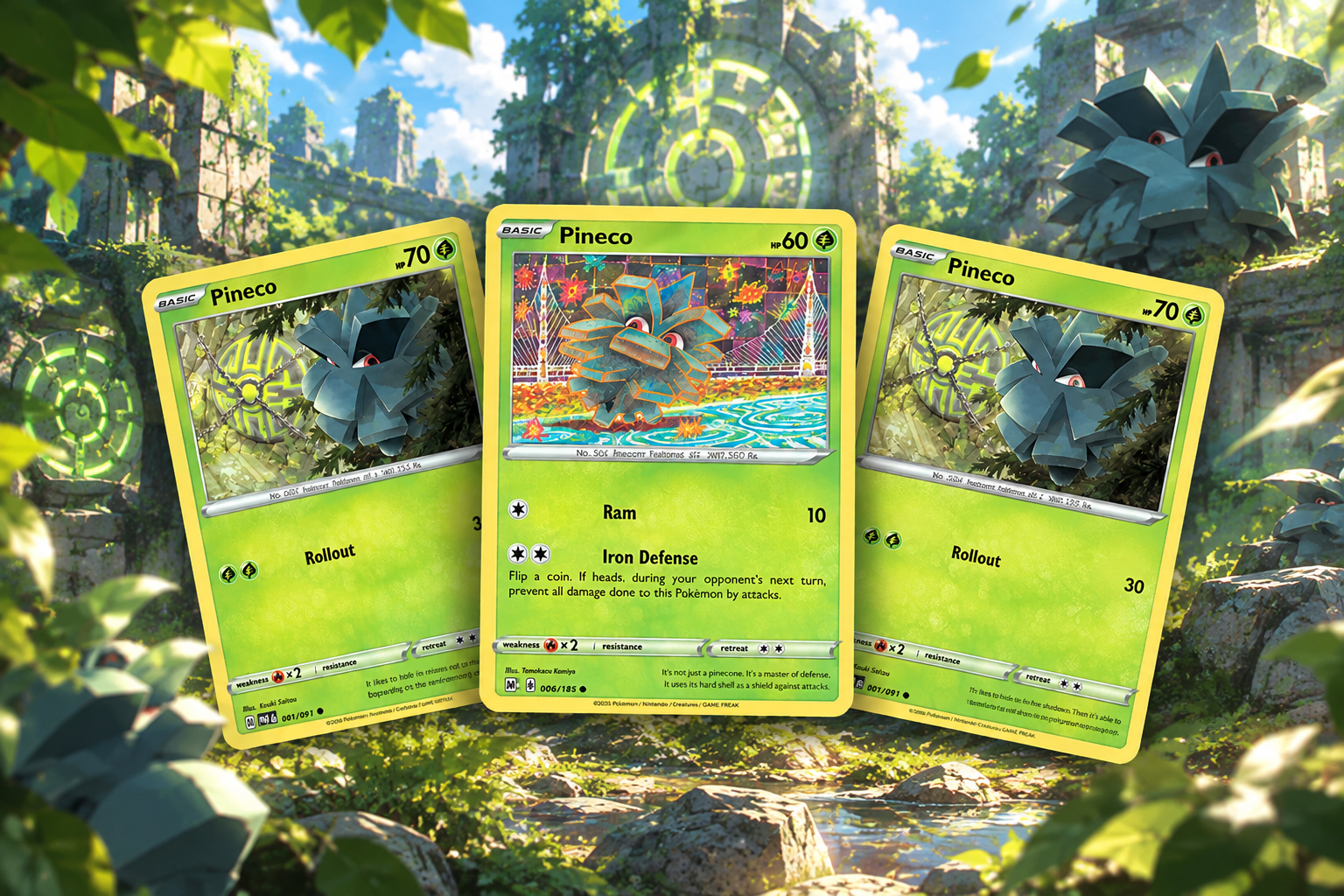
The recent catalog is bulk. Pineco's cards from HS Undaunted and Call of Legends run a few dollars raw with modest graded ceilings, and its newest prints, from Paldean Fates and Destined Rivals, are commons and reverse holos worth cents to a dollar or two.
None of the modern prints carry the scarcity that drives the vintage foils, so for value, the early 2000s are the only era that matters here.
Should you grade a Pineco card in 2026?
Grading Pineco is a vintage reverse-holo gamble, with big upside and long odds.
Unseen Forces reverse holo #66:
- About $20 raw, and close to $497 in a PSA 10
- A spectacular multiple, but full-card foil from 2005 gems rarely, so a raw submission is a real bet, and buying a slab removes the guesswork
Skyridge reverse holo #85 and Neo 1st Editions:
- Cheap to mid raw with PSA 10s in the low-to-mid hundreds, worth grading a pristine copy, though the same condition risks apply
Modern prints: not worth the fee
Which Pineco card should you actually buy in 2026?
A dollar or two: a modern common or reverse holo, the plain way to own the bagworm.
Around $10: a raw Neo Discovery or Neo Destiny 1st Edition, affordable Johto vintage.
$20 to $42: a raw Unseen Forces or Skyridge reverse holo, cheap now with real graded upside if you can gem it.
Several hundred: a graded Unseen Forces reverse holo, the crown of the Pineco market.
The takeaway
The money in Pineco has almost nothing to do with the bug and everything to do with old foil. A self-destructing pinecone nobody would call a chase Pokémon owns a $500 card, purely because early-2000s reverse holos are so punishing to grade that clean copies barely exist.
Buy a cheap Neo-era print if you just like the little pinecone, and chase the Unseen Forces or Skyridge reverse holo if you understand the grading odds. As an investment it is a niche, condition-driven play, so a slabbed copy is safer than a raw gamble unless you can read foil surfaces well.
FAQ
What is the most valuable Pineco card?
The 2005 Unseen Forces reverse holo #66, worth about $20 raw but nearly $500 in a PSA 10. The 2003 Skyridge reverse holo is the priciest raw Pineco at around $42, with a graded copy in the low hundreds.
Why are Pineco's reverse holos so valuable?
Reverse holos coat the whole card in foil, which shows every scratch and print line, so early-2000s copies rarely survive gem-mint. That scarcity of clean examples, not demand for Pineco itself, drives the high PSA 10 prices.
Should I grade my Pineco?
Only the vintage reverse holos or Neo-era 1st Editions, and only if flawless. The Unseen Forces reverse holo offers a huge multiple but gems rarely, so buying a slab is often smarter than submitting a raw copy.
What does Pineco evolve into?
Pineco evolves into Forretress, a Bug and Steel fortress Pokémon. Pineco itself is known for coating itself in bark and using Self-Destruct or Explosion, which fits its pinecone-bagworm design.
Are modern Pineco cards worth anything?
Not really. Recent prints from HS Undaunted, Call of Legends, Paldean Fates, and Destined Rivals sell for cents to a few dollars. Pineco's value is almost entirely a vintage reverse-holo story.