How Much Is a Lickitung Card Worth in 2026?
Lickitung is one of those Kanto Pokémon that feels like it should be worthless, and mostly is. The long-tongued oddball has been printed dozens of times since 1999, and most copies sell for a dollar or two.
But its value hides in unusual places. The single most expensive Lickitung is not even a normal trading card, and the most valuable graded copy is a reverse holo most people overlook. What is worth most depends entirely on whether you mean raw or slabbed.
This guide untangles it, ranking the Lickitung cards that actually matter in 2026 with a clear call on each. Prices move, so treat these as a recent snapshot and confirm live sales first.
What Lickitung actually is
Lickitung (#108) is a Normal-type Licking Pokémon from Kanto, introduced in Generation 1 and famous for a tongue twice the length of its body. It evolves into Lickilicky, added in Generation 4.
It has never been a competitive or chase Pokémon, but it has been printed steadily across nearly every era, from the 1999 Jungle set to modern Illustration Rares. That long, uneven history is why its prices are so scattered.
Why Lickitung's value is scattered
Most Pokémon have a clear most-valuable card. Lickitung does not, and that is what makes it interesting.
Its priciest raw card comes from a 2000 Topps Chrome set, a non-standard release outside the main trading card game. Its most valuable graded card is an Aquapolis reverse holo with a very low gem rate. And its best grading return comes from a cheap Detective Pikachu print. Three different cards, three different reasons.
What Lickitung cards are worth in 2026
Across dozens of prints, Lickitung runs from a dime to several hundred dollars raw, with the average around six dollars. Here is how the tiers break down.
| Tier | Prints | Value |
|---|---|---|
| Raw oddity | Topps Chrome #108 (2000) | raw about $200 to $375 |
| Graded chase | Aquapolis reverse holo #90 (2003) | raw about $60 to $90, PSA 10 into the thousands |
| Vintage and promo | Jungle 1st Edition #38, Southern Islands, FireRed and LeafGreen | about $8 to $46 |
| Sleeper grade play | Detective Pikachu #16 (2019) | raw under $1, PSA 10 near $88 |
| Bulk | most base, reverse, and modern prints | $0.10 to $5 |
The Lickitung cards that matter, ranked
Topps Chrome #108 (2000)
The most expensive Lickitung, and the one that confuses everyone. It comes from the 2000 Topps Chrome set, a chrome-finish release tied to the TV animation era rather than the main card game. The Tekno and Sparkle variants run from around $200 to $375 raw.
- Raw: about $200 to $375
A niche collectible for Topps completists, not a standard TCG card. Do not confuse it with the common Jungle Lickitung.
Aquapolis reverse holo #90 (2003)
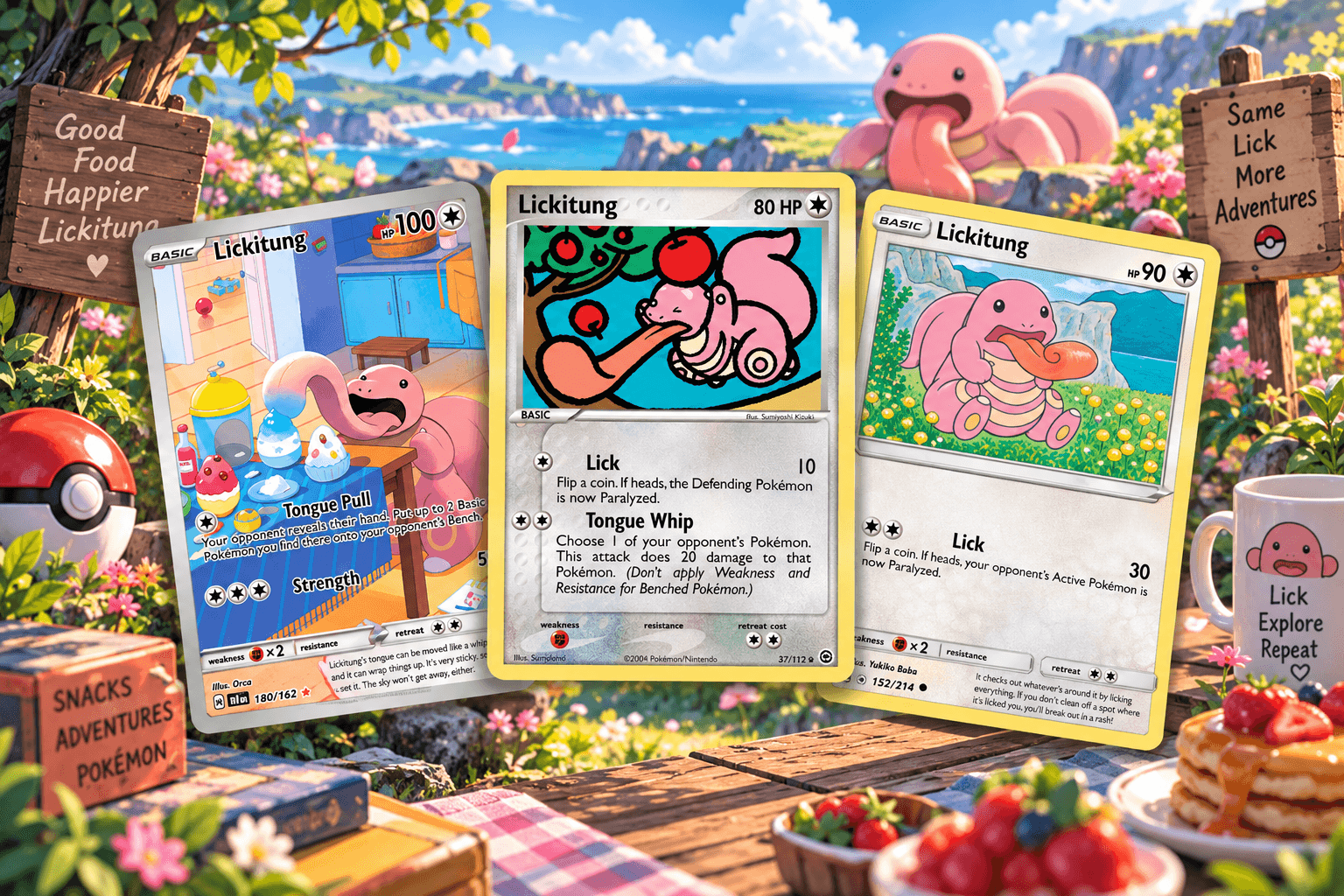
The graded chase, and the most valuable Lickitung in a slab. Raw copies run around $60 to $90, but a PSA 10 has reached into the thousands because the e-Reader reverse holo gems at a very low rate.
- Raw NM: about $60 to $90
- PSA 10: into the thousands, on a low gem rate
This is a grading gamble on centering and surface. Buy it already slabbed if you want the sure copy.
Jungle #38, 1st Edition (1999)
The vintage original. Unlimited copies are a dollar or two, but the 1st Edition carries an age and stamp premium, with clean PSA 10s ranging from roughly $140 to nearly $400 depending on the source.
- Raw NM, 1st Edition: about $8 to $15
- PSA 10: about $140 to $390
A recognizable vintage pickup for Kanto collectors.
Southern Islands and FireRed & LeafGreen
The mid vintage tier. The Southern Islands Lickitung, from the collectible island promo set, trades around $20 to $40. The FireRed and LeafGreen holo #37 has been a recent mover near $25 to $46.
- Range: about $20 to $46
Solid, affordable vintage without the chase price tag.
Detective Pikachu #16 (2019), the sleeper
The best grading return in the lineup. It costs well under a dollar raw, yet a PSA 10 has sold near $88, one of the highest multiples on any Lickitung card. The catch is the low absolute value, so it only makes sense if you already own a pristine copy.
- Raw: under $1
- PSA 10: near $88
A fun, low-cost grading experiment, not a serious investment.
Temporal Forces #180 Illustration Rare (2024)
The modern chase. As the shortest print in its set, this Illustration Rare is the one modern Lickitung with real collector attention, though it sits in the low double digits.
Everything else
The 151 reverse holo, HeartGold and SoulSilver, Platinum, and the many base prints are $0.10 to $5. Binder filler.
The full Lickitung ranking
| Rank | Card | Set (Year) | Value snapshot |
|---|---|---|---|
| 1 | Topps Chrome #108 | Topps Chrome (2000) | raw about $200 to $375 |
| 2 | Lickitung reverse holo #90 | Aquapolis (2003) | PSA 10 into the thousands |
| 3 | Lickitung #38 1st Edition | Jungle (1999) | PSA 10 about $140 to $390 |
| 4 | Lickitung #37 holo | FireRed and LeafGreen (2004) | about $25 to $46 |
| 5 | Lickitung #16 | Southern Islands (2001) | about $20 to $40 |
| 6 | Lickitung #180 IR | Temporal Forces (2024) | low double digits |
| 7 | Lickitung #16 | Detective Pikachu (2019) | raw under $1, PSA 10 near $88 |
| 8 | Modern and base prints | Various | $0.10 to $5 |
Should you grade your Lickitung?
For most prints, no. The commons and modern reverse holos are worth a few dollars, and a slab costs more than the card.
Grading makes sense on the vintage holos and the Aquapolis reverse holo, and only when clean, since e-Reader and Jungle centering are both unforgiving. The Detective Pikachu #16 is a fun exception, cheap to try for a high multiple, but low in absolute dollars.
Before you submit, check the card with the JK Index Grading Readiness Scan so you are not paying fees on a card that comes back a 9.
Which Lickitung should you buy?
Under $5: a modern reverse holo or the Detective Pikachu #16, cheap and fun, with a grading experiment attached.
Under $50: a Southern Islands or FireRed and LeafGreen holo, recognizable vintage at a fair price.
Under $150: a graded Jungle 1st Edition, the classic vintage Lickitung.
Grail tier: the Aquapolis reverse holo slabbed, or a Topps Chrome print for the true oddity collector.
Skip: grading commons, and overpaying for base prints.
Final take
Lickitung is a card that rewards knowing exactly what you have. The name hides a Topps Chrome oddity, a low-pop graded chase, a vintage original, and a cheap sleeper grade play, all under one goofy tongue.
For most collectors, a modern print or a mid-vintage holo is the right, affordable pick. The real money sits in corners that most buyers never check, so match your card's set and number carefully before you assume it is bulk.
FAQ
What is the most valuable Lickitung card?
It depends. The priciest raw card is a 2000 Topps Chrome print at $200 to $375, but that is a non-standard release. Within the main card game, the Aquapolis reverse holo #90 is the most valuable graded, reaching into the thousands in a PSA 10.
Is a Jungle Lickitung worth anything?
The unlimited Jungle print is a dollar or two. The 1st Edition is the one with value, with clean PSA 10 copies ranging from roughly $140 to nearly $400.
Should I grade my Lickitung?
Only the vintage holos, the Aquapolis reverse holo, or as a cheap experiment the Detective Pikachu #16. Modern commons are not worth the fee.