How Much Is a Jungle Wigglytuff Worth in 2026 (And Is It Worth Grading)?
How Much Is a Jungle Wigglytuff Worth in 2026 (And Is It Worth Grading)?
Published by JK Index · Updated August 2026
I need you to check something before you keep reading.
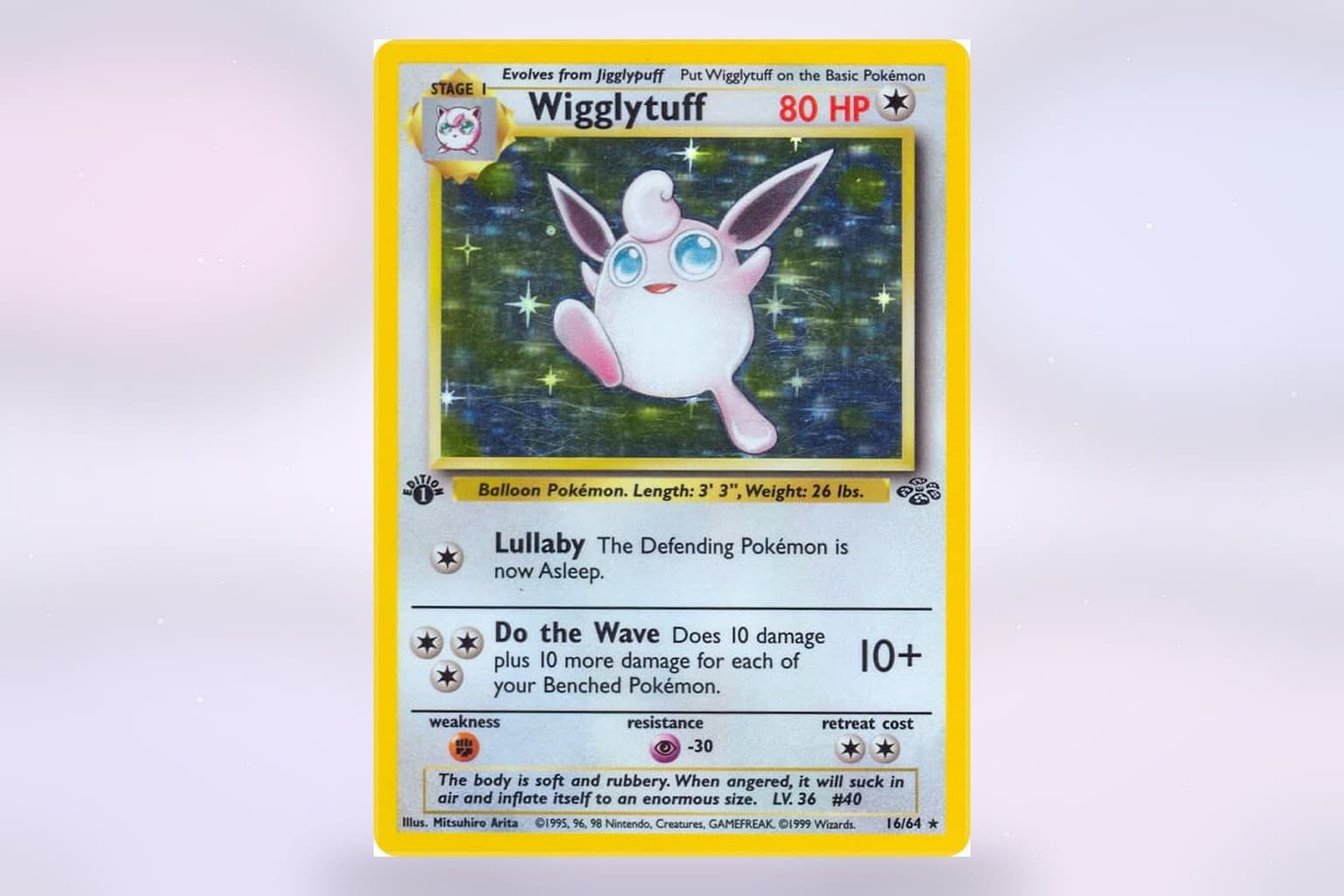
If you have a 1st Edition Jungle Wigglytuff in a binder somewhere, pull it out right now. Look at the bottom-left of the illustration panel. There should be a small black rarity symbol shaped like a diamond (that's "Rare"). Is it there? Or is it missing?
If it's missing — congratulations, you own the Jungle set "no symbol" error variant, and it's worth roughly 6x the standard version. If the symbol is there — you have the corrected version, which is still a real vintage card but sits at a very different price point.
This is one of the most valuable 30-second checks in the entire vintage Pokémon collectibles market. Let's walk through the details.
What "no symbol" Wigglytuff actually is
When Jungle first shipped in June 1999, Wizards of the Coast had a printing issue on the initial print run. Rarity symbols on some holo cards were accidentally omitted — printed without the small marker that indicates a card's rarity tier. This affected multiple holos, but Wigglytuff is the one collectors talk about most because the correction happened relatively quickly, which means "no symbol" versions are meaningfully scarcer.
Both versions are technically 1st Edition. Both have the identical illustration, same holo pattern, same card back. The only visual difference is the tiny black diamond in the lower-left of the illustration panel. Missing = error variant. Present = corrected variant.
Real 2026 comps
Prices pulled from PSA sold-comp data and JK Index Pokémon TCG market feeds as of August 2026:
| Version | Raw NM | PSA 8 | PSA 9 | PSA 10 |
|---|---|---|---|---|
| 1st Edition "No Symbol" Error Holo | $180–$260 | $450–$620 | $850–$1,150 | $1,600–$2,200 |
| 1st Edition Standard Holo | $32–$48 | $110–$150 | $220–$310 | $580–$780 |
| Unlimited Holo | $18–$28 | $58–$85 | $130–$180 | $340–$460 |
The gap between the error and the standard 1st Edition is roughly 3–4x at PSA 10. That's the entire trade. Population on the "no symbol" 1st Edition PSA 10 sits at 68 — genuinely scarce for a vintage card at this price tier.
Is it worth grading?
Depends on which version, and depends on condition.
"No symbol" 1st Edition grading math:
- All-in cost: ~$40 PSA Value tier
- Break-even: any grade above PSA 6 recovers cost. PSA 7 returns $320.
- Real target: PSA 8 clears $520, PSA 9 clears $1,000, PSA 10 clears $1,900
- Downside: essentially none — every graded copy returns above raw + fees
Standard 1st Edition grading math:
- All-in cost: ~$40
- PSA 8 returns $130 — modest profit ($60) after raw purchase + fees
- PSA 9 returns $260 — meaningful gain
- PSA 10 target ($680) — worth submitting only if the card is unplayed with clean corners
Unlimited grading math:
- Rarely worth grading unless you got the card free (childhood collection). PSA 8 returns $70. Break-even math is thin at best.
If you have a "no symbol" Wigglytuff, grade it regardless of condition — the population is small enough that any grade returns real money. If you have the standard 1st Edition, grade only if it's genuinely pack-fresh.
How to check for the error variant (30 seconds)
Only two things to verify:
1. Look at the bottom-left of the illustration panel. There should be a small black diamond symbol below the card art. On the error variant, that diamond is missing entirely — you'll see a blank area where the symbol would be. On the standard variant, the diamond is clearly present.
2. Confirm 1st Edition. Look for the small "Edition 1" badge on the lower-left of the illustration panel, roughly aligned with Wigglytuff's foot. If it's not there, you have the Unlimited version regardless of whether the rarity symbol is present.
Both checks combined take 30 seconds with a phone flashlight. That's the entire authentication protocol.
Why this specific error matters more than most
The vintage Pokémon TCG has produced dozens of print errors over the years — misaligned edition badges, holo pattern variations, damage number misprints on Team Rocket cards, missing letters on English promotional cards. Most of them are traded in tight collector niches and don't have significant broader market attention.
Wigglytuff "no symbol" is different because it hits three specific conditions:
First: the error is visible without a magnifier. Anyone can check.
Second: the correction happened fast, so the error variant is genuinely scarce rather than borderline-scarce.
Third: Wigglytuff has cult appeal from the Jungle set's "song attack" flavor text and its role as the puffball-Pokémon evolution of Jigglypuff. Non-collectors know Wigglytuff.
Those three factors together create a card that has real broad collector interest, not just niche error-variant chaser attention. That's why the pricing has held up over the last decade — appreciation of ~9% annually since 2018, without the volatility of speculation-driven vintage names.
Final take
Check every Jungle Wigglytuff you can find. This is the highest-ROI 30-second audit in the entire vintage Pokémon catalog. Sellers routinely list "no symbol" copies without noting the error — because they don't know it's an error. If you're buying, examine the illustration panel closely and let the seller undervalue their card if that's their mistake.
If you have the error variant, grade it and hold. If you have the standard 1st Edition and it's pack-fresh, grade it. If it's played, sell raw. The math is honest at every tier — Wigglytuff isn't asking for speculation. It's just asking you to look at the card carefully.
That's usually all any vintage card is asking for.