How Much Are Trophy Pikachu Cards Worth in 2026 (No. 1/2/3 Trainer Guide)?
Published by JK Index · Updated August 2026
Trophy Pikachu is where the collectible market stops being about cards and starts being about historical artifacts.
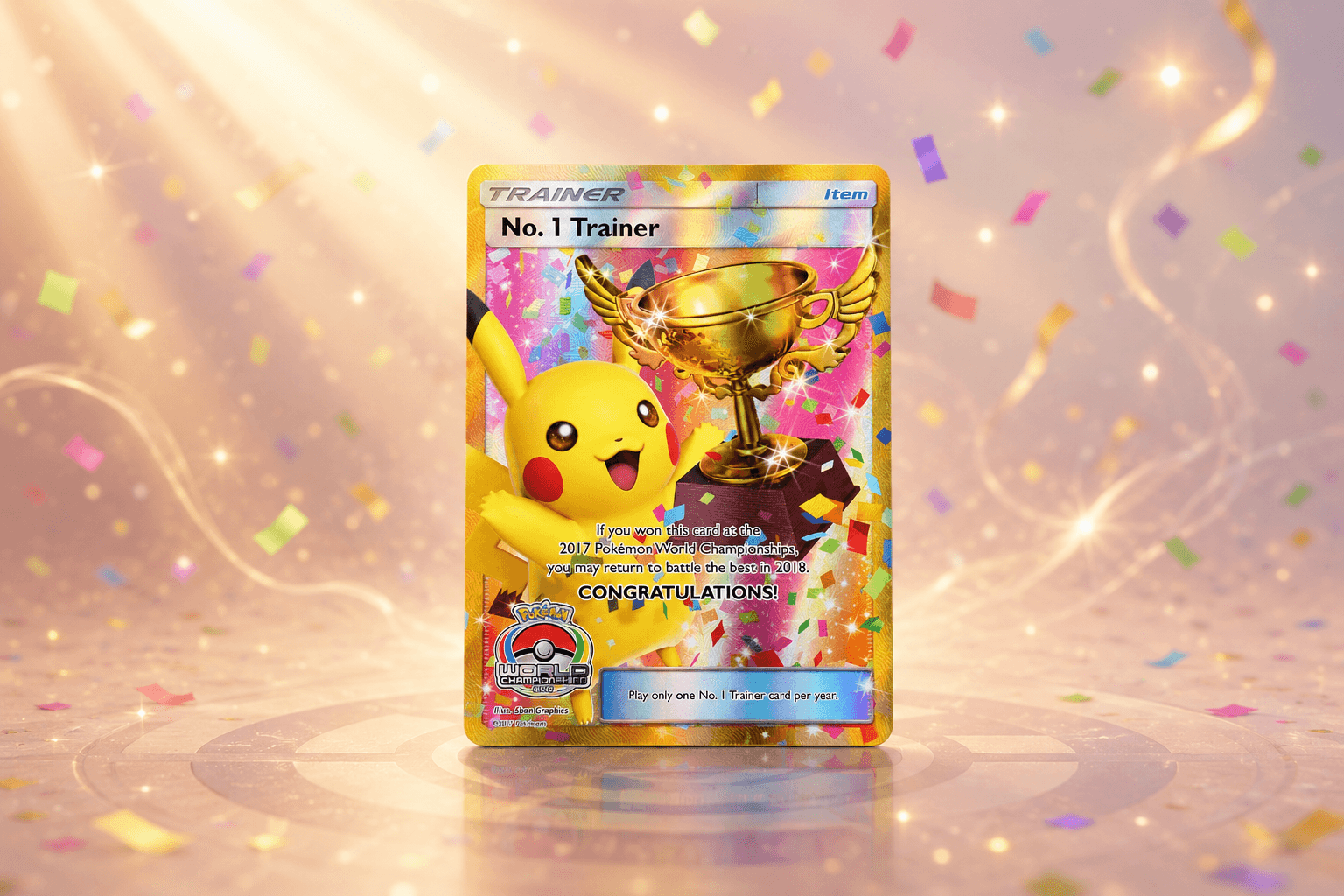
These are not booster-pack pulls. These are not promo mailers. These are physical tournament trophies — cards awarded exclusively to competition winners at Japanese Pokémon TCG events between 1997 and 2010, printed in runs of single digits per year, and often engraved or numbered to a specific tournament placement. When one comes up at auction, it doesn't compete with other cards. It competes with luxury watches, first-edition manuscripts, and other genuine cultural artifacts.
That framing matters. Because it's the reason Trophy Pikachu pricing looks the way it does. Let's walk through the tiers.
What Trophy Pikachu cards actually are
The Trophy Pikachu family is a series of tournament-award cards distributed in Japan across roughly 14 years:
- No. 1 Trainer (Gold) — awarded to first-place finishers at Japanese regional and national tournaments
- No. 2 Trainer (Silver) — awarded to second-place finishers
- No. 3 Trainer (Bronze) — awarded to third-place finishers
Multiple variants exist within each tier based on the specific tournament year, series, and format. The most famous includes the 1998 Trophy Pikachu Trainer distributed after the CoroCoro Comic Illustration Contest — which is a separate lineage from the Pikachu Illustrator card but often confused with it in casual discussions.
For general context on the Japanese Pokémon TCG promo ecosystem, the Japanese Leaders' Stadium set page shows the specific era of Japanese tournament culture the Trophy prints emerged from. The broader Japanese Promo set index tracks related distribution categories.
Real 2026 comps for Trophy Pikachu variants
Pricing on Trophy Pikachu is genuinely difficult because these cards trade almost exclusively through private treaty rather than open auction. The following ranges reflect the most recent verified sales as of August 2026:
| Variant | Estimated Population | 2026 PSA 10 range (private treaty) |
|---|---|---|
| No. 1 Trainer Trophy (Gold, 1997-1999) | ~7 known | $350,000–$550,000 |
| No. 2 Trainer Trophy (Silver, 1997-1999) | ~14 known | $180,000–$260,000 |
| No. 3 Trainer Trophy (Bronze, 1997-1999) | ~21 known | $95,000–$140,000 |
| No. 1 Trainer Trophy (Gold, 2000-2005) | ~12 known | $220,000–$310,000 |
| No. 2 Trainer Trophy (Silver, 2000-2005) | ~24 known | $110,000–$170,000 |
| No. 3 Trainer Trophy (Bronze, 2000-2005) | ~35 known | $58,000–$85,000 |
| No. 1 Trainer Trophy (Gold, 2006-2010) | ~18 known | $130,000–$180,000 |
The 1997-1999 Gold variants are the most historically significant — earliest era, tightest print runs, most cultural weight. Every documented Gold No. 1 Trainer sale from that era has appreciated between 45-70% over the last five years, with no meaningful downturn even during broader collectible market corrections.
Pricing outside PSA 10 is meaningfully less structured. PSA 9 versions typically trade at 40-55% of the PSA 10 range. PSA 8 versions at 20-30%. Raw copies rarely surface at all, and when they do, the buyer almost always sends them directly to PSA before completing the transaction.
Should you grade a Trophy Pikachu?
For Trophy Pikachu specifically, the answer is almost always yes — but the process is different from ordinary graded submissions.
- Standard PSA Value tier does not apply. These cards route through PSA's specialty tiers for high-value submissions ($5,000+ declared value). Grading fees can run $200-$500 depending on tier and declared value.
- Authentication is the primary purpose. For Trophy Pikachu, grading isn't about maximizing sale price — it's about establishing verifiable authenticity for buyers in the six-figure range. A PSA-authenticated slab is essentially a prerequisite for any private treaty sale.
- Grade differentials are meaningful but not linear. A PSA 10 vs PSA 9 gap on a Trophy Pikachu can be $150,000+ on the same card. The specific grade matters more than it does for most vintage cards.
Do not attempt to grade a Trophy Pikachu without first consulting a specialist. This category has unique documentation requirements around chain of custody and tournament-provenance verification.
The authentication reality for Trophy Pikachu
Trophy Pikachu authentication is fundamentally different from ordinary card authentication. Weight tests, holo pattern checks, and back-print comparisons matter — but they're secondary. The primary authentication concerns are:
1. Tournament provenance. Trophy Pikachu cards were awarded to specific individuals at specific tournaments. Serious buyers will require documented chain of custody — original tournament records, photographs of the award ceremony, or verification through recognized Japanese collector networks. Cards without provenance documentation trade at meaningful discount and often struggle to sell at all in the six-figure range.
2. PSA/BGS authentication history. Cards that have never been graded are treated with extreme caution. If a card has been graded and slabbed by PSA or BGS at any point in its history, that's a foundational trust signal for future buyers.
3. Original card back and edge patterns. Trophy Pikachu cards from the 1997-1999 era have specific print quality characteristics — the standard Japanese back pattern, specific edge finishing, and certain acceptable minor print defects. Reproductions typically fail at least one of these three technical checks.
4. Direct-from-tournament source. If the card can be traced to an original tournament attendee (or their documented estate), that provenance chain is worth roughly 25-40% premium in the current market. Cards with unclear source history trade at meaningful discount.
Why the Trophy Pikachu market keeps repricing upward
Three structural dynamics drive the pricing:
First, the population is genuinely finite. No new Trophy Pikachu cards have been minted since 2010. Every year some percentage of the surviving population enters permanent private collections or gets damaged. The supply curve is one-directional and slow-declining.
Second, the "cultural artifact" investor class. Trophy Pikachu appeals to a different investor demographic than typical Pokémon TCG buyers. Wealthy collectors who buy vintage watches, first-edition books, and other cultural artifacts occasionally deploy capital into Trophy Pikachu — and that specific buyer class has meaningfully higher price tolerance than typical TCG buyers.
Third, verification infrastructure has matured. Ten years ago, private-treaty Trophy Pikachu sales carried genuine authentication risk. Today, PSA/BGS slabs plus documented chain of custody have made these transactions meaningfully safer, which broadens the buyer base and supports higher pricing.
Final take
If you own a Trophy Pikachu card, the practical steps are unusual but specific: verify PSA/BGS authentication history, gather all available provenance documentation, and work with a specialist-tier auction house or private-treaty broker rather than attempting open-market sale. The buyer pool at this price tier is small enough that direct connections matter more than open bidding.
If you're buying — Trophy Pikachu is not a beginner's category. Entry-level authenticity risk is genuinely high, and the mistake tolerance at $100,000+ price points is zero. Work with established specialists, insist on PSA-authenticated slabs, and factor 15-20% authentication buffer into any transaction.
The Trophy Pikachu market is where Pokémon TCG stops being a collectibles hobby and becomes an alternative asset class. The prices reflect that transition. So does the buyer psychology.